A clean home isn’t just about appearances. It’s about how you feel when you walk through the door, how your family breathes, and yes, even how productively you think and work. Studies show that people living in cleaner homes report lower stress levels, better sleep quality, and higher overall well-being than those in cluttered, dirty environments. That’s no small thing!
Yet for most of us, home cleaning feels overwhelming. There’s always another room to tackle, another surface to wipe down, another pile of laundry creeping up from nowhere. Sound familiar? I’ve been there. And after years of experimenting with routines, products, and strategies, I can tell you confidently: cleaning your home doesn’t have to consume your life.
The secret isn’t cleaning more. It’s cleaning smarter. With the right room-by-room strategy, the best natural cleaning solutions, and a few genius time-saving hacks, you can maintain a genuinely clean and healthy home in far less time than you’re spending right now. This guide covers absolutely everything: From daily habits to deep cleaning schedules, from the kitchen to the bathroom, from eco-friendly products to professional-level techniques you can do yourself.
Why a Clean Home Matters More Than You Think
Before we dive into the how, let’s talk about the why. Understanding the real impact of a clean home on your health, happiness, and finances is genuinely motivating. And motivation is exactly what most of us need to build lasting cleaning habits.
The Science Behind Clean Homes and Mental Health
The connection between our physical environment and our mental state is well-established. A landmark study in the Personality and Social Psychology Bulletin found that women who described their homes as cluttered or unfinished had higher levels of the stress hormone cortisol throughout the day than women who described their homes as restful and restorative. Clutter creates a constant, low-level mental load, a background hum of unfinished business that drains your cognitive resources without you even realizing it.
A clean, organized home, by contrast, signals to your brain that things are under control. Stress decreases. Focus improves. You feel more capable and less overwhelmed. It sounds almost too simple, but the research backs it up consistently.
How Household Allergens Affect Your Family’s Health
The average home contains millions of dust mites, along with varying levels of pet dander, mold spores, pollen, and volatile organic compounds from cleaning products and furniture. For allergy and asthma sufferers, these invisible threats are a daily reality. But even for people without diagnosed allergies, poor indoor air quality causes fatigue, headaches, and respiratory irritation that many people attribute to other causes entirely.
Regular vacuuming with a HEPA filter, washing bedding at high temperatures weekly, and controlling humidity levels to prevent mold growth are not just cleanliness habits; they’re genuine health interventions. A clean home is a healthier home, full stop.
The Financial Case for Regular Cleaning
Here’s an angle most people don’t consider: regular home cleaning is financially smart. Appliances that are cleaned and maintained regularly last significantly longer. Grout that is sealed and maintained doesn’t need replacing. Carpets that are vacuumed and spot-treated regularly last years longer than neglected ones. Hardwood floors that are properly cared for can literally outlast the house they’re installed in.
Neglect, on the other hand, leads to premature replacement costs that can run into thousands. Regular cleaning is quite literally an investment in the value of your home.
Shifting Your Mindset: Cleaning as Self-Care
The single most transformative shift you can make around home cleaning is reframing it. Instead of seeing it as a chore that life imposes on you, try seeing it as an act of care for yourself, for your family, and for your home. Put on a podcast you love, make yourself a great cup of coffee, and approach the next thirty minutes as an intentional, mindful time invested in your own well-being. It changes everything. I promise.
Building the Perfect Home Cleaning Routine
The difference between people who maintain consistently clean homes and those who feel perpetually behind isn’t energy or time. Its structure. A well-designed cleaning routine transforms cleaning from a reactive emergency response into a calm, manageable part of daily life.
Understanding the Four Levels of Cleaning
Effective home cleaning happens at four distinct levels, each serving a different purpose.
Daily cleaning tasks are the small, quick habits that prevent buildup: wiping down kitchen counters after cooking, doing the dishes, a quick bathroom sink wipe, and a two-minute tidy of high-traffic areas. These tasks take ten minutes or less in total and make an enormous difference to how your home looks and feels day to day.
Weekly cleaning tasks go deeper: vacuuming and mopping all floors, cleaning bathrooms thoroughly, changing bed linens, wiping down kitchen appliances, and dusting surfaces throughout the home. A focused weekly clean typically takes one to two hours, depending on home size, and it keeps your home consistently presentable without ever letting things spiral.
Monthly cleaning tasks address the areas that don’t need constant attention but do accumulate over time. Cleaning inside the microwave and oven, wiping down cabinet fronts, cleaning windows and mirrors, washing throw pillows and cushion covers, and descaling the kettle and coffee machine.
Seasonal deep cleaning tackles the big jobs: moving furniture and vacuuming underneath, cleaning behind appliances, washing curtains, cleaning out wardrobes, and addressing any areas where mold, limescale, or significant grime has accumulated. Twice a year is the standard recommendation for most homes.
Creating a Realistic Cleaning Schedule
The best cleaning schedule is one you’ll actually follow. Be honest about your lifestyle when designing it. If you work full-time and have young children, a daily one-hour cleaning session is not realistic, and setting that expectation will only lead to guilt and abandonment. Instead, build micro-habits into existing routines: wipe the bathroom sink while your coffee brews, run the robot vacuum while you’re at work, spend five minutes tidying the living room before bed.

Assign specific tasks to specific days rather than trying to do everything at once. Monday floors, Tuesday bathrooms, Wednesday kitchen deep wipe, Thursday dusting and surfaces, Friday laundry and linens. Each session is short, focused, and achievable. And by Friday, your entire home has received attention.
Dividing Tasks Across the Household
If you share your home with a partner, children, or housemates, cleaning should be a shared responsibility. Assign age-appropriate tasks to children, even toddlers, who can put their toys away. School-age children can vacuum their own bedrooms, unload the dishwasher, and wipe surfaces. A simple chore chart on the refrigerator creates accountability without nagging.
For partners and housemates, have an honest conversation about expectations and divide tasks according to preference and availability where possible. Someone who genuinely doesn’t mind doing the bathrooms but hates vacuuming should do the bathrooms. Playing to preferences reduces resentment and increases consistency.
Room-by-Room Home Cleaning Guide
Every room in your home has its own cleaning challenges, its own priority areas, and its own best practices. Here’s how to tackle each one effectively.
The Kitchen
The kitchen is the hardest-working room in most homes and typically the one that needs the most cleaning attention. Daily maintenance is essential here: wipe down countertops after every use, clean the stovetop after cooking while it’s still warm and residue is easier to remove, and never leave dishes in the sink overnight.
For weekly kitchen cleaning, focus on the sink and faucet, the exterior of appliances, cabinet handles and fronts, and the floor. Use a degreasing spray on the stovetop and backsplash. A mixture of dish soap, baking soda, and warm water works beautifully on grease without harsh chemicals.
The inside of the refrigerator deserves attention monthly. Remove all items, wipe shelves with a solution of baking soda and warm water, check for expired items, and replace everything neatly. The oven is a quarterly job for most households. Use a baking soda and vinegar paste applied the night before and wiped away the next morning for an effective, fume-free clean.
The Bathroom
Bathrooms are the room most people clean most frequently, and this is for a good reason. Bacteria and mold thrive in warm, humid environments, and a bathroom that looks clean can still harbor significant microbial activity.
Daily bathroom habits make weekly cleans far easier. Squeegee shower screens and tiles after every use to prevent water spots and soap scum buildup. Keep a small spray bottle of daily shower spray on the shelf, a diluted mixture of dish soap, hydrogen peroxide, and water, and spritz the shower after each use. This simple habit dramatically reduces the scrubbing required on cleaning day.
Weekly, clean the toilet thoroughly under the rim, the seat, the base, and the surrounding floor. Clean the sink and faucet, wipe the mirror, and mop the floor. Monthly, address the grout, descale the showerhead by soaking it in white vinegar, and clean the extractor fan cover, which accumulates dust quickly.
The Living Room
The living room tends to accumulate dust, pet hair, and surface clutter faster than most rooms, but rarely gets the thorough attention it deserves. Start every cleaning session here with a declutter pass. Return items to their proper places before any actual cleaning begins.
Dust from top to bottom, always. Ceiling fans, light fittings, and shelves before vacuuming the floor, so that fallen dust gets picked up at the end. Use a microfiber cloth slightly dampened with water for most surfaces, which traps dust rather than redistributing it into the air.
Upholstery cleaning is one of the most neglected living room tasks. Vacuum sofa cushions and armrests weekly using the upholstery attachment. Spot-treat stains immediately with an appropriate fabric cleaner. Wash removable cushion covers monthly. For non-removable upholstery, a fabric refresher spray between cleans keeps things smelling fresh.
The Bedroom
The bedroom deserves more cleaning attention than most people give it. We spend roughly a third of our lives in this room, and it’s a hot spot for dust mites. Microscopic creatures that live in mattresses, pillows, and bedding are one of the most common household allergens.
Wash all bedding sheets, pillowcases, and duvet covers each week at a minimum of 60 degrees Celsius to kill dust mites effectively. Vacuum your mattress monthly using the upholstery attachment, and flip or rotate it every three months. Consider mattress and pillow protectors, which are far easier to wash regularly and significantly extend the life of both.
Keep the bedroom as clutter-free as possible. Surfaces piled with belongings are harder to dust and create that subconscious mental clutter that disrupts sleep quality. A bedside table with only the essentials and clear floor space creates a genuinely restful environment.
Hallways, Entryways, and Home Offices
Hallways and entryways are the most walked-through areas of any home and among the most overlooked in cleaning routines. They’re where outdoor dirt, pollen, and debris enter your home, and if not addressed regularly, they distribute that contamination throughout every other room. Vacuum and mop entryways at least twice weekly. Keep a doormat both outside and inside every entrance, and wash them regularly.
Home offices have become increasingly important cleaning zones as remote work has normalized. Keyboards harbor more bacteria per square inch than a toilet seat, a fact that should motivate regular cleaning. Use compressed air to dislodge debris between keys, then wipe with an isopropyl alcohol cloth. Clean your monitor screen with a microfiber cloth and a dedicated screen cleaner. Wipe your desk surface and mouse daily, and vacuum the area around and beneath your desk weekly.
Deep Cleaning Your Home: When, Why, and How
Regular maintenance cleaning keeps your home presentable. Deep cleaning keeps it genuinely healthy. There’s an important difference between the two, and both are necessary.
What Deep Cleaning Actually Means
A deep clean goes beyond visible surfaces to address the areas that accumulate grime, bacteria, and allergens over time but aren’t part of regular cleaning routines. It means cleaning behind and underneath appliances, inside cabinets and drawers, the tops of door frames, window tracks, extractor fans, and the grout between tiles. It means stripping beds completely and cleaning the mattress, washing curtains and blinds, and addressing any areas where mold or mildew has started to develop.
Most cleaning experts recommend a full home deep clean twice a year, traditionally aligned with the change of seasons in spring and autumn. However, high-traffic areas like kitchens and bathrooms benefit from a more focused deep clean every one to two months.
Deep Cleaning the Kitchen
Move your refrigerator and oven away from the wall and clean behind them. The grease, dust, and debris that accumulate in these spaces are genuinely alarming and can be a fire hazard around oven elements. Clean the refrigerator coils with a brush attachment on your vacuum; dirty coils reduce efficiency and increase energy bills. Degrease the range hood filter by soaking it in boiling water with a generous squeeze of dish soap and a cup of baking soda for thirty minutes.
Clean inside every cabinet and drawer; remove all contents, wipe the interior with an antibacterial solution, and replace items neatly. Descale the kettle, coffee machine, and dishwasher with a dedicated descaling product or white vinegar cycle. Clean the garbage disposal by filling it with ice cubes and rock salt and running it, the abrasive action scrubs the interior walls.
Deep Cleaning the Bathroom
Bathroom deep cleaning goes beyond the weekly surface clean. Address the caulk around the bath and shower. Black mold in caulk can be treated with a bleach-based mold remover applied with an old toothbrush, left for several hours, and rinsed away. If the caulk is significantly deteriorated, remove and replace it entirely.
Clean the extractor fan thoroughly; a dusty extractor fan runs inefficiently and circulates dust back into the room. Clean drain covers and, if necessary, use a drain cleaning solution or a plumber’s snake to address slow-draining sinks and showers. Wash your shower curtain in the washing machine on a warm cycle with a cup of white vinegar.
Deep Cleaning Carpets and Upholstery
Carpets should be professionally deep-cleaned or cleaned with a carpet cleaning machine every six to twelve months. Between professional cleans, a thorough vacuum with a high-quality machine, combined with baking soda deodorizing treatments, maintains freshness effectively.
For upholstery, check the manufacturer’s cleaning code before applying any product. W means water-based cleaners are safe, S means solvent-only, WS means either, and X means vacuum only. A fabric upholstery cleaner applied with a clean cloth and worked gently into the fabric, then blotted dry, refreshes and sanitizes most sofas and chairs effectively.
Professional Cleaners vs. DIY Deep Cleaning
There are genuine arguments for both. Professional cleaners bring equipment and expertise that achieve results difficult to replicate at home. Particularly for carpet cleaning, oven cleaning, and whole-home deep cleans. For many busy households, the time saved and quality achieved by booking a professional deep clean once or twice a year is absolutely worth the cost.
That said, a thorough DIY deep clean done systematically with good products and the right tools achieves excellent results and costs a fraction of the price. The key is approaching it methodically, room by room, top to bottom, inside and out, rather than trying to do everything at once in a panicked rush.
Natural and Eco-Friendly Home Cleaning Solutions
The home cleaning product industry is worth billions of dollars annually, but the truth is that many of the most effective cleaning solutions cost almost nothing and are made from ingredients you already have in your kitchen.
The Essential Natural Cleaning Pantry
Every natural cleaning approach builds on a handful of core ingredients. White vinegar is a mild acid that cuts through limescale, soap scum, and mineral deposits, and has natural antibacterial properties. Baking soda is a gentle abrasive and deodorizer that tackles grime, absorbs odors, and reacts with vinegar to produce a fizzing action that loosens stubborn residue. Dish soap cuts through grease and lifts dirt from virtually any surface. Hydrogen peroxide is a natural disinfectant and mild bleaching agent. Lemon juice provides acid-based cleaning power along with a fresh, natural fragrance. And essential oils like tea tree, lavender, and lemon add antibacterial properties and a pleasant scent to homemade solutions.
Stock these ingredients, and you have everything you need to clean virtually every surface in your home without a single commercial chemical product.
The Ultimate DIY All-Purpose Cleaner
Mix one cup of white vinegar with one cup of water in a spray bottle. Add half a teaspoon of dish soap and fifteen drops of your choice of essential oil (lemon and tea tree is a personal favorite combination). Shake before each use and apply to most hard surfaces, countertops, sinks, tiles, appliances, and more. Wipe away with a microfiber cloth. This solution cleans effectively, disinfects naturally, and leaves surfaces streak-free and fresh-smelling.
Note: Do not use vinegar-based cleaners on natural stone surfaces like marble or granite, where the acidity can cause etching over time.
Natural Bathroom Cleaner
For bathroom cleaning, mix half a cup of baking soda with enough dish soap to form a thick paste, then add ten drops of tea tree essential oil for its proven antibacterial properties. Apply to the toilet bowl, bath, sink, and tile surfaces. Let it sit for ten minutes to allow the ingredients to do their work, then scrub with a brush and rinse thoroughly. For the toilet, drop two tablespoons of baking soda and a quarter cup of white vinegar directly into the bowl, let the fizzing reaction work for fifteen minutes, then scrub and flush.
Eco-Friendly Kitchen Degreaser
Kitchen grease responds remarkably well to a simple solution of hot water, a generous squeeze of dish soap, and the juice of half a lemon. For heavier grease buildup on the stovetop or range hood, make a paste of baking soda and dish soap, apply generously, leave for fifteen minutes, then scrub with a stiff brush and wipe clean. The combination of the baking soda’s abrasive action and the soap’s grease-cutting ability handles most kitchen grease without resorting to harsh chemical degreasers.
Reducing Single-Use Plastic in Your Cleaning Routine
The environmental impact of conventional cleaning products extends well beyond the chemicals themselves. The packaging is a significant contributor to household plastic waste. Consider switching to concentrated cleaning tablets that dissolve in water in reusable bottles, solid cleaning bars for surfaces and floors, or refillable cleaning product systems offered by an increasing number of eco-friendly brands. Replacing disposable paper towels with washable microfiber cloths is another simple switch that reduces waste significantly while actually improving cleaning effectiveness.
Home Cleaning Hacks That Save Time and Effort
Work smarter, not harder. These are the strategies that make the biggest difference to how quickly and effectively you clean.
The Two-Minute Rule
If a cleaning task takes less than two minutes, do it now. Wipe the stovetop while you’re waiting for the kettle to boil. Rinse and stack the dishes immediately after eating rather than leaving them in the sink. Squeegee the shower screen before you step out. Hang up your clothes rather than draping them on the chair. These micro-habits prevent the accumulation of small tasks into overwhelming messes, and they take genuinely negligible time individually.
The Top-to-Bottom, Left-to-Right Method
Professional cleaners always work from the top of a room to the bottom and from one side to the other systematically. This ensures that dust and debris dislodged from higher surfaces fall onto areas yet to be cleaned, rather than contaminating surfaces you’ve already finished. Start with ceiling corners and light fittings, work down to shelves and furniture, and finish with the floor. Work left to right so you never accidentally double back over a cleaned area.
Let Products Do the Work
One of the biggest time wasters in home cleaning is not allowing products sufficient time to work before scrubbing. Apply your toilet cleaner, spray your shower walls, and spread your oven cleaning paste, then walk away for ten to fifteen minutes. During this time, go and clean something else entirely. When you return, the product has done the heavy lifting and surfaces wipe or scrub clean in a fraction of the time it would have taken immediately after application.
Speed Cleaning Your Entire Home in Under Two Hours
This is entirely achievable with the right approach. Set a timer and commit to moving at a pace. Carry a cleaning caddy with all your supplies from room to room rather than making multiple trips. Do one type of task throughout the entire home before moving to the next. All dusting first, then all surface wiping, then all vacuuming, then all mopping. This task-batching approach is significantly more efficient than cleaning one room completely before moving to the next.
Smart Home Cleaning Tools in 2026
Technology has genuinely transformed home cleaning in recent years. A robot vacuum running on a daily schedule keeps floors consistently clean with zero manual effort. A cordless stick vacuum makes quick clean-ups fast and effortless compared to a corded model. A steam mop sanitizes tile and vinyl floors without any chemicals at all. A spin scrubber with interchangeable brush heads tackles grout, tile, and bathroom surfaces in half the time of manual scrubbing. These tools represent real investments, but the time they save over months and years is substantial.
I have written an article regarding the best robot vacuums at the moment. Check it out here.
Home Cleaning for Specific Households and Lifestyles
No two households are the same. Here’s how to adapt your cleaning approach to your specific situation.
Families with Young Children
Homes with young children face unique cleaning challenges: sticky surfaces, crayon marks on walls, frequent food spills, and the general chaos that accompanies small humans. The key is building cleaning into the rhythm of the day rather than treating it as a separate activity. A quick tidy before naptime, a floor sweep after meals, and a ten-minute family tidy before bed keep things manageable without requiring marathon cleaning sessions.
For stain removal from children’s artwork on walls, a magic eraser sponge is remarkably effective on painted surfaces. For crayon on hardwood floors, a small amount of mayonnaise left on the mark for a few minutes before wiping clean lifts it beautifully. Keep a dedicated stain removal spray accessible in the kitchen and living room for immediate response to spills.
Pet Owners
Pet owners deal with fur, dander, muddy paw prints, and occasional accidents that require specific cleaning strategies. Daily vacuuming in pet zones, not weekly, is the baseline requirement for fur management. A robot vacuum running daily in areas where your pets spend most time is genuinely transformative.
For pet odor control, enzyme cleaners are the only truly effective solution. They break down the organic compounds that cause odors at a molecular level rather than masking them with fragrance. For muddy paw prints on hard floors, allow the mud to dry completely before cleaning; attempting to clean wet mud simply spreads it. Once dry, it vacuums or sweeps up easily.
Allergy Sufferers
For households with allergy or asthma sufferers, cleaning is a health necessity rather than merely an aesthetic one. Use a HEPA-filter vacuum; standard vacuums recirculate fine particles back into the air. Wash all bedding weekly at 60 degrees. Use allergen-proof mattress and pillow covers. Vacuum upholstery weekly. Keep indoor humidity between 40 and 50 percent to discourage dust mite and mold growth. Replace chemical-heavy cleaning products with fragrance-free alternatives, as artificial fragrances are a common asthma trigger.
Small Apartments
Cleaning a small apartment efficiently requires smart organization as much as cleaning technique. Clutter is magnified in small spaces, so the one-in-one-out rule, for every new item that comes in, one must go out, is essential. Use vertical storage to keep surfaces clear and easy to wipe. A compact cleaning kit that stores neatly is essential: a small caddy, a spray mop, a handheld vacuum, and a set of microfiber cloths covers 90 percent of cleaning needs in a small space.
Working from Home
Remote workers face a unique psychological challenge. The home is simultaneously their living space and their workplace, which means cleaning feels ever-present and never-ending. The solution is dedicated cleaning times with clear boundaries. Clean before the working day starts, or after it finishes, but not during. Create a separation between work mode and home mode that includes a brief tidying ritual as part of your transition routine.
Organizing Your Home for Easier Cleaning
The single biggest lever you can pull to make home cleaning easier isn’t a new product or a better technique. It’s having less stuff.
The Decluttering-First Principle
You cannot clean effectively around clutter. Every item on a surface must be moved, cleaned around, or cleaned under. And the more items there are, the longer every cleaning task takes and the more likely you are to avoid it altogether. Decluttering your home systematically, one room, one category at a time, is the highest-leverage activity available to anyone who wants a cleaner, more manageable home.
Start with the areas that cause you the most stress. If the kitchen counter covered in appliances, mail, and miscellaneous items makes you anxious every time you see it, start there. Remove everything from the surface and only return what is genuinely used regularly and deserves prime counter real estate. The difference in how easy that surface is to clean, and how much better the kitchen looks, is immediate and significant.
Storage Solutions That Make Cleaning Easier
Good storage isn’t just about organization; it’s about making surfaces easy to wipe and floors easy to vacuum. Keep items off the floor wherever possible. Use drawer organizers so that drawers can be wiped out easily. Store frequently used items in accessible locations so they’re returned to their homes consistently rather than left on surfaces.
In the bathroom, a simple shelf or cabinet for toiletries is infinitely easier to clean than products scattered across every surface. In the kitchen, a pot rack keeps cabinets organized and counters clear. In children’s rooms, low open shelving and labeled bins make toys easy to put away and realistic for children to actually use.
The One-In-One-Out Rule
This simple principle prevents the gradual accumulation of clutter that affects virtually every home over time. For every new item that enters your home, a new piece of clothing, a new kitchen gadget, a new book, one existing item leaves. Donate it, sell it, or discard it. Applied consistently, this rule keeps your possessions at a sustainable level and your home consistently easier to clean and maintain.
The Best Home Cleaning Products and Tools of 2026
The right tools genuinely transform how quickly and effectively you clean. Here’s what’s worth investing in.
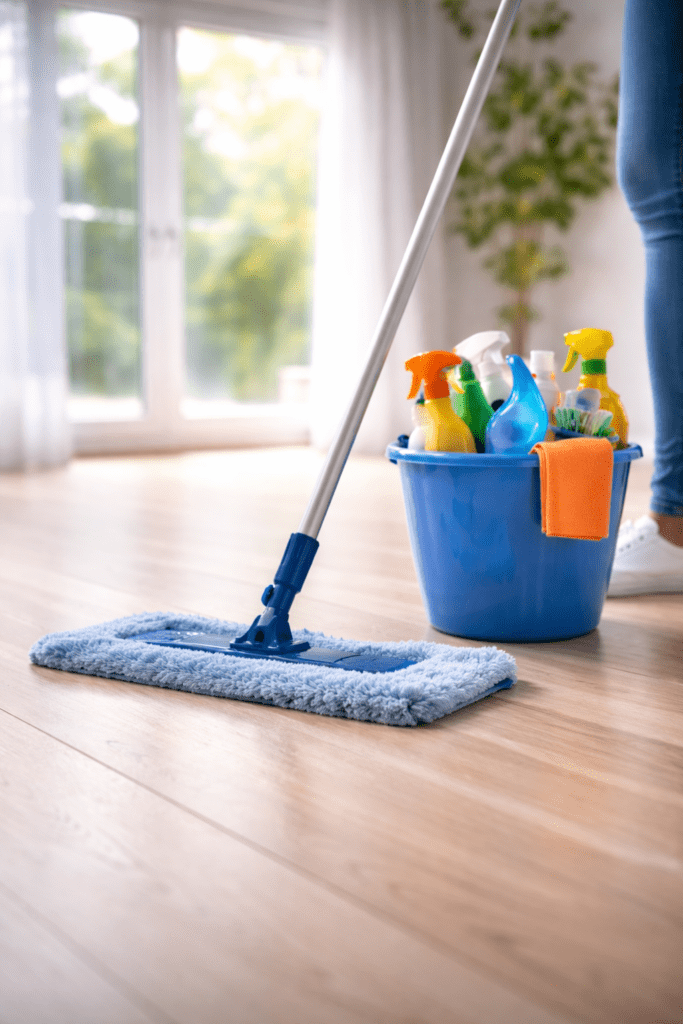
The microfiber flat mop remains the undisputed champion of floor cleaning across virtually every surface type. Its ability to trap rather than redistribute dirt, combined with minimal moisture requirements, makes it superior to every traditional mop design for regular maintenance cleaning.
A high-quality HEPA vacuum cleaner is non-negotiable for homes with carpets, pets, or allergy sufferers. Brands like Dyson, Miele, and Shark consistently produce excellent performers across different price points. Cordless models have improved dramatically in battery life and suction power and offer a convenience advantage for quick clean-ups that makes regular vacuuming far more likely to happen.
Steam cleaners have become increasingly versatile; modern models handle floors, tile grout, bathroom surfaces, upholstery, and even clothing. For chemical-free deep cleaning and sanitization, a steam cleaner delivers results that rival professional cleaning on appropriate surfaces.
A robot vacuum running on a daily schedule is the single investment that has the greatest impact on day-to-day floor cleanliness for the least ongoing effort. Set it, schedule it, and forget about it. Click here to view the best models.
For cleaning products, the trend toward concentrated, refillable, and naturally formulated cleaners continues to accelerate in 2026. Brands like Branch Basics, Blueland, and Method lead the market for effective, eco-conscious cleaning solutions that perform comparably to conventional chemical products.
Maintaining a Clean Home Long-Term – Habits That Stick
Knowing what to do is only half the battle. The other half is actually doing it consistently. Here’s how to build cleaning habits that genuinely last.
Why Most Cleaning Routines Fail
Most cleaning routines fail for one of three reasons: they’re too ambitious, they rely on motivation rather than habit, or they don’t account for real life. An ambitious routine that works perfectly when you have time and energy collapses the moment life gets busy, and then the guilt of not following through makes it harder to restart.
The solution is to design your routine for your worst days, not your best. What cleaning tasks can you realistically complete even when you’re tired, stressed, and short on time? Build your baseline around those tasks. Everything else is a bonus.
The Psychology of Habit Formation
Habits are formed through a simple loop: cue, routine, reward. To build a cleaning habit, attach it to an existing cue. The cue might be finishing dinner (cue: dishes done, routine: wipe kitchen counters, reward: clean kitchen before relaxing). Or waking up in the morning (cue: making coffee, routine: wipe bathroom sink, reward: fresh bathroom to start the day). Linking new cleaning habits to existing routines dramatically increases the likelihood that they’ll stick.
Getting the Whole Household Involved
A clean home is a shared responsibility, and the person who cares most about cleanliness shouldn’t carry the entire burden alone. Have an honest, non-confrontational conversation about shared expectations. Frame it around the benefits for everyone, a calmer, healthier, more welcoming home, rather than as a critique of anyone’s behavior. Agree on specific, clearly defined tasks rather than vague expectations, and revisit the arrangement regularly to ensure it’s working for everyone.
Seasonal Resets
Twice a year, spring and autumn are the traditional times to conduct a whole-home reset. Deep clean thoroughly, declutter systematically, reassess your cleaning products and tools, and adjust your routine for the coming season. This biannual reset prevents the gradual accumulation of grime and clutter that slowly makes homes feel difficult to manage, and it gives you a regular, fresh start that’s genuinely motivating.
Conclusion
A spotlessly clean home isn’t a luxury reserved for people with professional cleaners or endless free time. It’s absolutely achievable for anyone with the right routine, the right tools, and the right mindset. Whether you’re starting completely from scratch or simply looking to upgrade your existing habits, the strategies in this guide give you everything you need to transform the way you maintain your home in 2026.
Start small. Build one new habit at a time. Maybe it’s the two-minute rule applied to your kitchen every evening. Maybe it’s swapping your chemical cleaners for a simple DIY all-purpose spray. Maybe it’s finally scheduling your robot vacuum to run every morning before you wake up. Small changes compound into remarkable results over weeks and months.
The rooms in your home are where your life actually happens, where you cook and eat, where your children play, and where you rest and recover from the world. They deserve care. And so do you. A clean, organized, fresh-smelling home isn’t just aesthetically pleasing; it’s genuinely good for your health, your stress levels, your relationships, and your sense of well-being.
So take what you’ve learned here, pick one thing to implement today, and build from there. Your home is waiting, and it’s going to look absolutely amazing. I hope this guide was helpful for you, and if you made it to the end of this article, there’s one thing left to do: Let’s get cleaning!