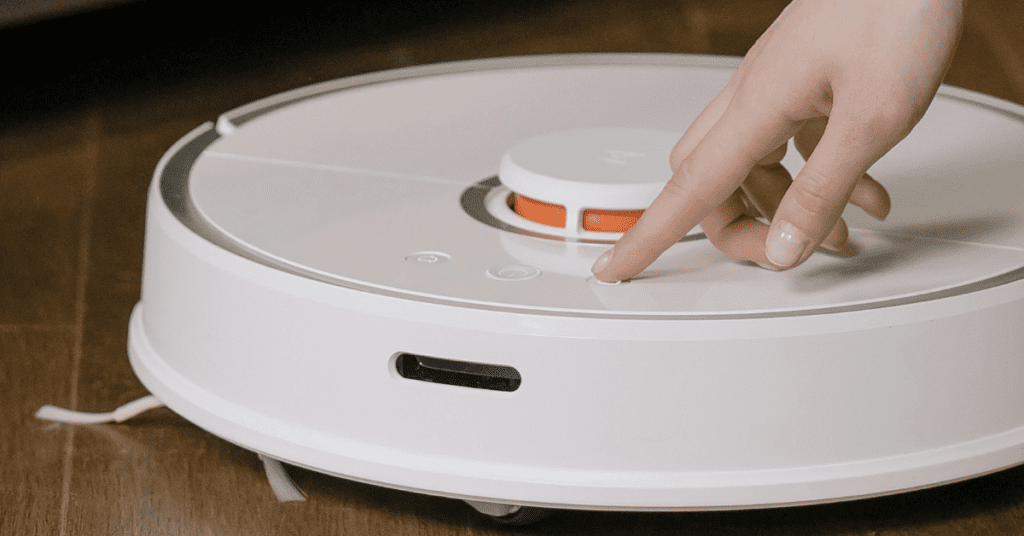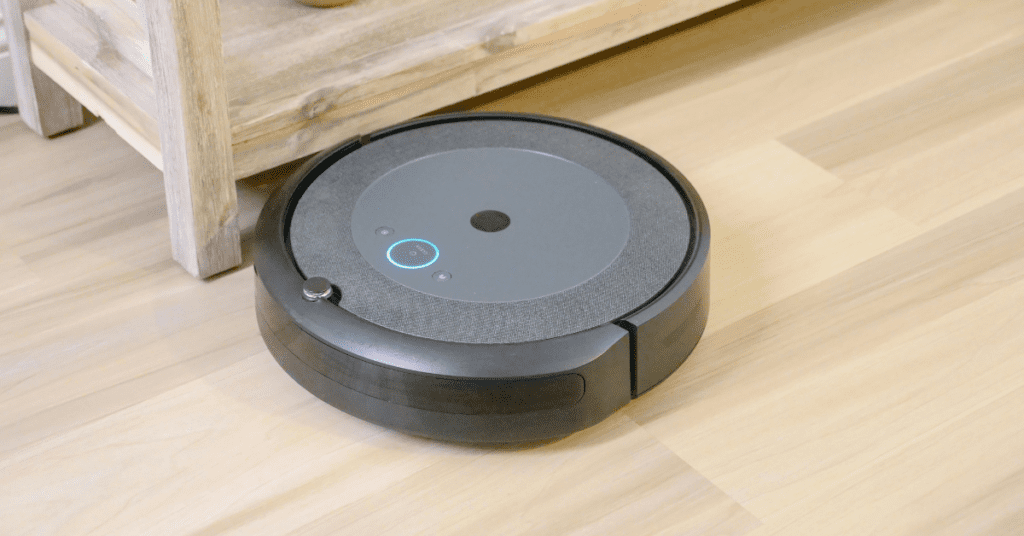
That bulky charging dock. The trailing power cord. The auto-empty base station that’s practically the size of a small appliance. None of it exactly screams interior design goals. And yet, just shoving it in a corner and hoping nobody notices isn’t really a solution either, especially when you’ve worked hard to create a home that looks and feels a certain way.
That’s where the robot vacuum cabinet comes in. Whether you want a sleek built-in nook, a clever piece of repurposed furniture, or a purpose-built cabinet that makes your robot vacuum completely invisible to guests, this guide covers every option available. I’ve pulled together the best ideas, products, and DIY solutions so you can find the perfect robot vacuum cabinet setup for your home.

Why a Dedicated Robot Vacuum Cabinet Is Worth Having
Let’s start by making the case, because if you’re on the fence about whether a dedicated robot vacuum cabinet is really necessary, the answer for most homes is a pretty emphatic yes. And not just for aesthetic reasons.
The Aesthetic Problem With Exposed Docks
Robot vacuum docks and base stations are functional objects designed by engineers, not interior designers. They come in black or white plastic, they have indicator lights that blink at inopportune moments, and in the case of auto-empty base stations, they’re often surprisingly large. Some models stand over 16 inches tall with a footprint that rivals a small waste bin. In a thoughtfully decorated living room, hallway, or kitchen, an exposed robot vacuum dock stands out in exactly the way you don’t want it to. It signals “appliance” in a space that might otherwise feel cohesive and intentional.
A dedicated cabinet or enclosure changes that entirely. Suddenly, the robot vacuum has a home that feels like it belongs, a piece of furniture that contributes to the room rather than detracting from it. Guests don’t notice the technology. They just noticed the room looks great.
The Practical Benefits Beyond Aesthetics
A good robot vacuum cabinet does more than improve appearances. It protects the charging dock from dust accumulation, a surprising amount of debris settles on dock contacts and sensors over time, causing unreliable charging and docking failures. It provides a natural solution to the cord management problem, keeping the power cable routed neatly rather than trailing visibly across the floor. And if your cabinet includes storage for accessories. Extra filters, replacement brush rolls, spare side brushes, and cleaning tools. It creates a complete, organized robot vacuum maintenance station that makes keeping up with regular maintenance genuinely effortless.
How the Right Cabinet Actually Improves Performance
This surprises people, but the placement and environment of your robot vacuum dock directly affect how reliably the device performs its return-to-home function. A dock that’s properly positioned within a purposeful cabinet, with the required clearance maintained, on a flat hard surface, with no obstacles interfering with the infrared docking sensors, will dock more reliably and charge more consistently than one shoved haphazardly into a corner. A thoughtful cabinet setup isn’t just good for your room. It’s good for your robot vacuum.
The Growing Trend of Purposeful Robot Vacuum Storage
As robot vacuum adoption has grown, so has the market for purposeful storage solutions. Interior designers are increasingly factoring robot vacuum dock placement into room layouts from the outset. Furniture manufacturers are producing pieces specifically designed to accommodate robot vacuum charging stations. This is no longer a niche concern for tech enthusiasts. It’s a mainstream interior design consideration for any household that owns one of these devices.
What to Consider Before Choosing a Robot Vacuum Cabinet
Before you buy furniture, start a DIY project, or rearrange your room, there are several critical factors to understand about your specific robot vacuum and your specific space. Getting these right ensures your cabinet solution works perfectly rather than creating a whole new set of problems.
Clearance Requirements – The Most Important Factor
Every robot vacuum manufacturer specifies minimum clearance requirements around the dock, and these are not suggestions. They’re functional necessities. The robot vacuum uses infrared sensors and sometimes visual markers to locate and align with its dock during the return-to-home process. Any obstruction within the clearance zone, a cabinet wall, a door, a decorative object, interferes with this process and causes missed docking attempts, frustrated wandering, and eventually a dead robot vacuum on the floor somewhere.
As a general rule, most standard robot vacuums require at least 18 inches of clear space in front of the dock and approximately 6 inches of clear space on each side. Some models with more sophisticated navigation systems have slightly reduced clearance requirements. Check your specific model’s manual for exact specifications. This information is always included and is worth verifying before planning any cabinet design.
The key implication for cabinet design: your robot vacuum cabinet cannot fully enclose the dock. The front of the dock must remain open with the required clearance maintained. Any cabinet must be open-fronted or have a sufficiently large open section at the front to allow reliable docking.
Measuring Your Dock Before Buying Anything
This sounds obvious, but is consistently overlooked. Robot vacuum docks vary enormously in size between brands and models. A basic charging-only dock for a standard robot vacuum might be just 5 inches wide, 5 inches deep, and 3 inches tall. An all-in-one auto-empty and auto-refill base station, like those used with the Roborock S8 Pro Ultra or the iRobot Roomba j9+, can be 10 to 12 inches wide, 12 to 15 inches deep, and 16 to 18 inches tall.
Measure your dock’s exact dimensions, width, depth, and height before choosing or building any cabinet. Add the required clearance measurements to those dimensions to determine the minimum footprint your cabinet solution needs to accommodate. Write these numbers down and keep them on hand when shopping for furniture or planning a DIY build.
Open vs. Enclosed Cabinet Designs
The fundamental design constraint of any robot vacuum cabinet is that it cannot be a fully enclosed box with a door that closes. The dock must have an unobstructed approach path at all times, not just when the robot is cleaning, but permanently, since the robot needs to be able to return home at the end of any cleaning cycle.
Three-sided designs, open at the front and the top, or open at the front with a back and two sides, work well and are the most common approach. Under-furniture designs, where the dock lives beneath a table or console with the front facing into the room, are also excellent. Designs with partial front panels that leave the lower section open for the robot to enter are another effective option. What doesn’t work: fully enclosed cabinets with doors, cabinets that position the dock facing a wall, or any design that places objects within the dock’s minimum clearance zone.
Power Access Planning
Your robot vacuum dock needs a power connection, and how you route that power cable significantly affects the quality of your cabinet setup’s appearance. The ideal situation is a power outlet located directly behind or within the cabinet, the cord disappears completely, and the installation looks perfectly clean. If an existing outlet is conveniently located, plan your cabinet position around it. If no convenient outlet exists, a recessed in-wall outlet installed at dock level behind the cabinet position is a worthwhile investment that transforms the appearance of any robot vacuum cabinet setup.
If you’re working with an outlet that’s not ideally positioned, a cable raceway or cord cover routed along the baseboard from the dock to the outlet, painted to match your baseboard color, is the next best option and produces a much cleaner result than a trailing visible cord.
Floor Type Considerations
Your robot vacuum dock should sit on a hard, flat surface for the most reliable docking performance. If your cabinet is positioned on carpet, consider placing a thin hard mat or board under the dock within the cabinet to provide the flat, stable surface the dock needs. Ensure the mat or board doesn’t raise the dock height significantly above the surrounding carpet level, which can interfere with the robot vacuum’s transition from carpet to the hard surface of the dock.
The Best Ready-Made Robot Vacuum Cabinet Solutions
The market for purposeful robot vacuum storage furniture has grown significantly, and there are now genuinely excellent ready-made options at every price point. Here are the best categories and specific recommendations.
Side Tables and End Tables With Open Lower Shelves
This is the most popular ready-made robot vacuum cabinet solution, and it works beautifully in living rooms, bedrooms, and hallways. A side table or end table with an open lower shelf, positioned so the shelf opening faces into the room, provides the perfect enclosure for a robot vacuum dock while adding useful surface space above.
The IKEA LACK side table has become the legendary cult choice for this application. At under $30, it has the perfect proportions, the lower shelf sits at the right height for most standard robot vacuum docks, the legs provide the necessary approach clearance at the front and sides, and the simple design suits virtually any interior style. It’s not purpose-built for robot vacuums, but it works so well that it has its own thriving community of robot vacuum storage hacks and modifications online. More on those in the DIY section.
For a more premium ready-made option, look for side tables with a lower shelf height of at least 4 to 6 inches, enough to fit the dock, with open fronts and sufficient leg clearance for the robot to approach from the front. West Elm, CB2, and Article all offer side tables in this configuration at mid-range price points.
Console Tables
A console table positioned against a wall with the robot vacuum dock stored underneath is an elegant solution for hallways, entryways, and living rooms. The table provides a useful decorative surface above, for plants, artwork, keys, or decorative objects. While the dock sits neatly beneath, facing into the room with its clearance zone maintained in the open space under the table.
Console tables with solid lower shelves don’t work as well as those with open frames, since a solid shelf limits the dock placement options and can interfere with the clearance requirements. Look for console tables with open bases and legs at least 5 to 6 inches taller than your dock. Tuck the dock toward the back of the table’s footprint with the dock facing forward, ensure the clearance zone in front is unobstructed, and route the power cord up along the table leg to the nearest outlet.
Purpose-Built Robot Vacuum Furniture
A small but growing category of furniture is now designed specifically to accommodate robot vacuum docks. These pieces, typically side tables or console units, feature an integrated lower compartment with the precise dimensions and clearance specifications of popular robot vacuum models built into the design. Some even include built-in cable management channels and storage compartments for robot vacuum accessories.
Roborock and iRobot have both released or partnered with furniture brands to produce matching furniture accessories for their premium models. These look exceptionally clean and intentional, but come at a premium price point. For a more accessible purpose-built option, search for “robot vacuum side table” or “robot vacuum dock table” on Amazon and Etsy. Both platforms have a growing selection of specifically designed pieces at various price points.
TV Stands and Media Consoles
In living rooms where the robot vacuum operates primarily on the main floor, a TV stand or media console with a kick plate opening, an open channel at the base of the unit between the legs, can serve as an excellent robot vacuum cabinet. The dock sits inside the cabinet base, the robot enters and exits through the kick plate opening, and from the outside, the dock is completely invisible.
This approach requires careful measurement to ensure the kick plate opening is tall enough for your specific robot vacuum model. Most standard models need at least 3.5 to 4 inches of vertical clearance, while taller models may need more. The dock should face outward toward the kick plate opening, with its required clearance maintained in the space immediately in front of the opening.
What to Look for When Shopping
When evaluating any ready-made piece of furniture as a potential robot vacuum cabinet, bring your dock measurements and check these specific things: lower shelf or opening height vs. dock height, approach clearance in front of the dock position, side clearance within the furniture piece, access to a power outlet from the planned dock position, and whether the dock will sit on a hard, flat surface within the furniture. A five-minute measurement check before purchasing saves significant frustration.
DIY Robot Vacuum Cabinet Ideas That Look Professionally Built
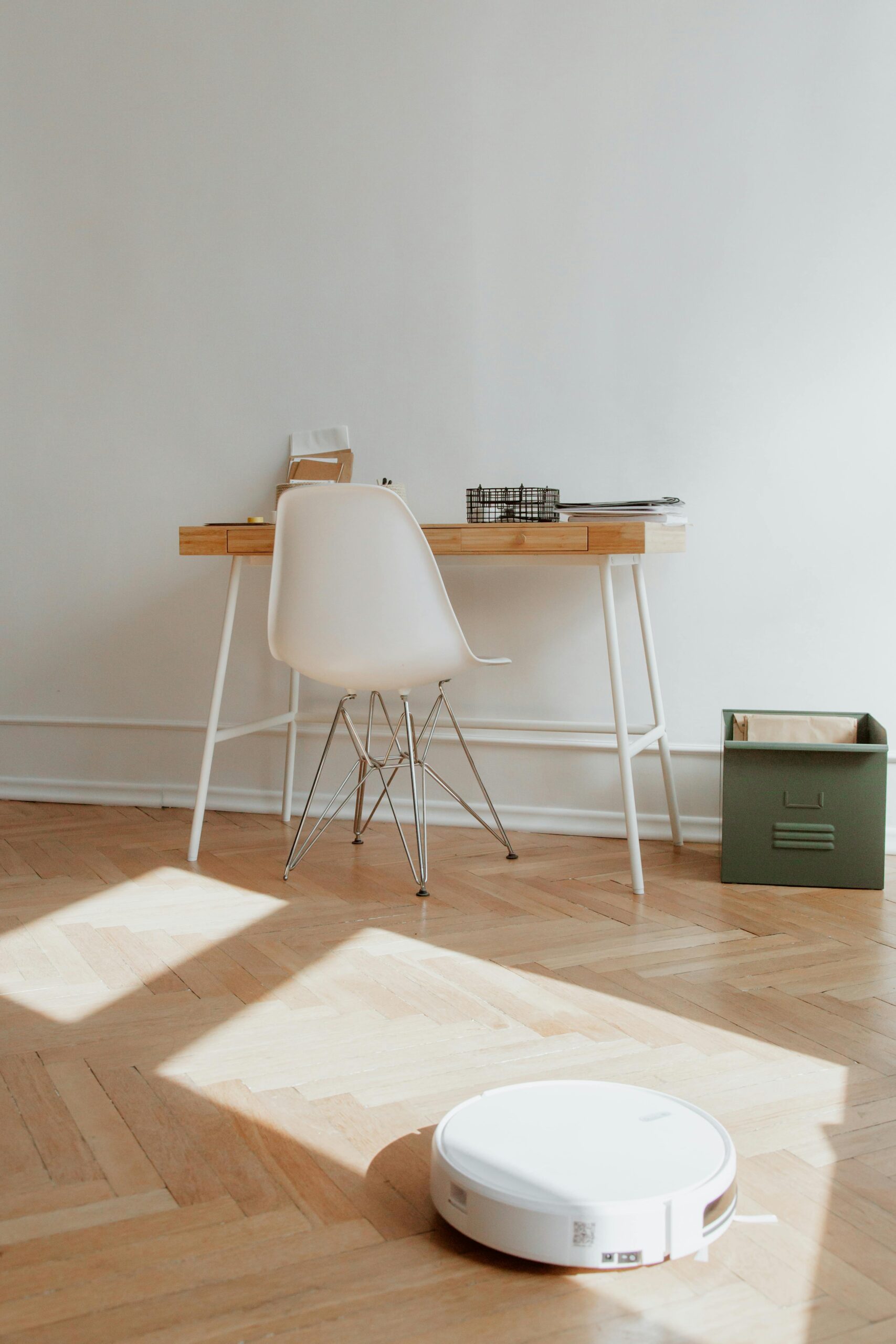
For those who want a truly custom solution, or simply enjoy a satisfying weekend project, these DIY approaches produce results that rival or exceed what’s available ready-made, often at significantly lower cost.
Building a Simple Wooden Robot Vacuum Nook
The simplest DIY robot vacuum cabinet is a three-sided wooden box, two sides and a back, open at the front and top. Sized precisely to your dock’s dimensions with the required clearance built in. This nook sits against the wall with the open front facing into the room, neatly enclosing the dock on three sides while leaving the approach path completely clear.
For materials, half-inch MDF or plywood is ideal, easy to cut, paint, and finish to a professional standard. Cut three panels to your measurements, join them with wood glue and finishing nails or pocket screws, sand smooth, fill any gaps or nail holes with wood filler, and paint to match your wall or baseboard color. A nook painted the same color as your baseboard and positioned at baseboard level becomes virtually invisible against the wall. The dock appears to simply disappear into the room’s architecture. Add a thin strip of the same baseboard molding across the top front edge of the nook for a finish that looks completely built-in.
The Kick Plate Cabinet Hack
This is one of the most satisfying robot vacuum storage solutions available because it creates a completely hidden dock that looks entirely intentional, like the robot vacuum was always meant to live there. The approach involves removing the kick plate panel at the base of an existing kitchen cabinet, pantry unit, or built-in cabinet run, and using the revealed space to house the robot vacuum dock.
Measure the kick plate opening carefully, height, width, and depth of the cavity behind it. Most standard kitchen cabinet kick plate cavities are 3.5 to 4 inches tall and 3 to 4 inches deep, which is sufficient for low-profile robot vacuum models. For taller models or larger base stations, you may need to modify the cabinet structure, either raising the cabinet slightly or deepening the kick plate cavity, which is a more involved project but produces a spectacular result.
Run the power cord through a small hole drilled in the side of the cabinet cavity to the nearest outlet inside the cabinet above, or route it through the base of the cabinet to an adjacent outlet. The result is a robot vacuum dock that is completely hidden, perfectly protected, and entirely invisible, accessible only to the robot itself, which slides in and out through the open kick plate space.
Modifying an IKEA LACK Table
The LACK side table modification is the most documented and community-supported robot vacuum cabinet hack available, with dozens of variations and refinements developed by the robot vacuum enthusiast community online. The basic modification involves removing the lower shelf from the LACK table, creating a dock space in the lower section that provides additional clearance compared to the standard shelf height.
More elaborate modifications include adding a back panel to enclose the dock on three sides, routing the power cord through a small hole drilled in the table leg, adding a small drawer or shelf above the dock space for accessory storage, and painting or wrapping the table to match existing furniture. The result can look remarkably polished for a project that typically costs under $50 in total.
Creating a Built-In Alcove
For the most architecturally integrated robot vacuum cabinet solution, building a dedicated alcove into existing cabinetry, an under-stair storage area, or a purpose-built recess in a wall creates a result that looks completely designed-in rather than retrofitted. This is the most involved DIY approach but produces the most impressive results, a robot vacuum dock that occupies its own dedicated architectural space, completely invisible to casual observation.
Under-stair storage areas are particularly well-suited to this approach. The angled lower section of under-stair storage often creates awkward, unusable spaces that are perfect for a robot vacuum dock, the dock fits neatly, the power cord routes easily to an adjacent outlet, and the access point can be left open or fitted with a low decorative panel that the robot passes beneath.
Using MDF to Build a Seamless Baseboard-Level Enclosure
For the most invisible possible robot vacuum cabinet, build a low-profile MDF enclosure that sits at baseboard level, extends to the same height as your existing baseboards, and is painted in an exact match to your wall or baseboard color. At first glance, it’s completely invisible. The enclosure reads as part of the room’s architectural detailing rather than as a piece of furniture or storage.
Cut MDF panels to create a three-sided box at the precise height of your existing baseboard. Add a piece of matching baseboard molding across the top front edge to seamlessly integrate with the room’s existing baseboard profile. Paint with the same paint color as your baseboards. Take a paint sample to the hardware store for a precise match. The result is a robot vacuum enclosure that is genuinely indistinguishable from the room’s architecture to anyone who doesn’t know to look for it.
Adding Doors to a DIY Enclosure
If you want your robot vacuum completely hidden when not in operation, adding a hinged or magnetic door to the front of your DIY enclosure is possible, but requires careful consideration of the clearance requirements. A door that opens fully to the side rather than swinging forward into the dock’s clearance zone is the safest design. Magnetic closure panels that swing open and remain open during operation work well if you’re willing to open them manually before each cleaning cycle. Alternatively, automatic door openers triggered by the robot vacuum’s schedule are available for more advanced builds, a genuinely satisfying solution that fully automates the concealment.
Robot Vacuum Cabinet Ideas for Every Room
The best location for a robot vacuum cabinet depends on the room, the floor plan, and how the robot vacuum is used in your home. Here are targeted ideas for every common placement scenario.
Living Room
The living room is the most common robot vacuum cabinet location and offers the most furniture integration opportunities. A side table flanking the sofa with the dock stored beneath the lower shelf is the most seamless option. The table is a natural part of the room’s furniture arrangement, and the dock is practically invisible. A media console or TV unit with a kick plate opening is another excellent option, keeping the dock completely hidden within the furniture structure.
For open-plan living spaces, consider positioning the robot vacuum cabinet at the boundary between the living and dining areas, a console table or sideboard in this position provides central access to both zones while keeping the dock in a natural furniture location. Style the surface above the dock with a plant, a table lamp, or decorative objects that draw attention upward and away from the dock below.
Kitchen
The kitchen offers one of the best robot vacuum cabinet opportunities available: the kick plate hack. As described in the DIY section, the kick plate cavity at the base of kitchen cabinets is perfectly sized for many robot vacuum docks and creates a completely seamless, hidden installation that looks entirely intentional. This works particularly well in kitchens where the robot vacuum is the primary cleaning tool for the kitchen floor.
Alternatively, under a kitchen island, if your island has an enclosed base rather than open legs, it provides excellent robot vacuum cabinet space. The island’s large footprint means there’s almost always room to accommodate the dock with its clearance requirements met, and the dock can face outward toward the open kitchen floor area for efficient cleaning coverage.
Hallway and Entryway
A robot vacuum cabinet in the hallway or entryway is ideal for whole-home coverage, a centrally located dock means the robot travels the minimum possible distance to reach any room in the house. A console table or slim side table in the hallway with the dock stored underneath is the most practical solution for narrow hallway spaces. For wider entryways, a purpose-built nook beside the front door creates a dedicated robot vacuum station that feels like a designed-in feature of the space.
Bedroom
Bedroom robot vacuum cabinets benefit from discreet, low-profile designs that don’t visually dominate the space and don’t interfere with the calm atmosphere most bedrooms aim for. A nightstand with an open lower shelf is an excellent option, the dock sits neatly beneath the nightstand surface, the robot cleans the bedroom floor on a schedule, and the setup is entirely unobtrusive. Position the dock beside the nightstand closest to the room’s power outlet for the most convenient cord routing.
Laundry Room and Utility Room
For auto-empty base stations or combination wet-dry base stations that are larger and less aesthetically refined, the laundry room or utility room provides an ideal cabinet location. These spaces are typically adjacent to main living areas and provide direct floor access for the robot while keeping the larger base station completely out of sight. A simple built-in shelf or open cabinet unit in the utility room creates a dedicated robot vacuum station that keeps the main living spaces completely free of visible technology.
Open-Plan Living Spaces
In open-plan spaces where the robot vacuum covers a large continuous floor area, central placement is key to efficiency. A room divider unit, a double-sided bookcase, or a freestanding cabinet positioned in the open plan to define space between living and dining zones provides an excellent structural element that can also house the robot vacuum dock on one of its sides. This approach turns the robot vacuum cabinet into a functional part of the room’s spatial organization rather than a purely storage-focused solution.
How to Hide Robot Vacuum Cords and Power Cables Neatly
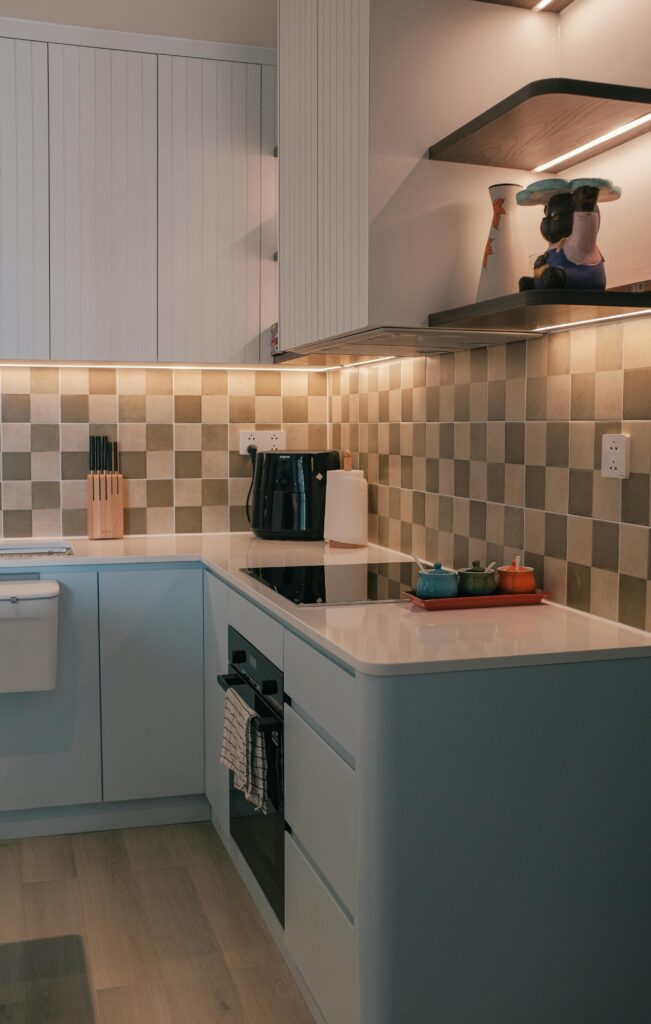
A robot vacuum cabinet that hides the dock beautifully but leaves a trailing power cord visible defeats much of its own purpose. Cord management is the finishing detail that takes a robot vacuum cabinet from good to genuinely polished.
Cable Raceways and Cord Covers
The most accessible cord management solution for most homes, cable raceways are plastic channels that attach to baseboards or walls and conceal the power cord within a neat, flat-profile enclosure. The D-Line range is consistently the highest-rated for quality and finish, available in multiple widths and in white, black, and wood effect finishes. Choose a raceway color that matches your baseboard color as closely as possible, route the cord from the dock along the baseboard to the nearest outlet, and secure it with the included adhesive strips. When matched well to the baseboard, the raceway becomes nearly invisible, particularly at the lower sightlines where robot vacuum cords typically run.
For the most invisible result, paint the installed raceway with the same paint as your baseboard after installation. A painted raceway that matches the baseboard color and profile reads as part of the room’s architecture rather than an afterthought addition.
In-Wall Recessed Outlet Installation
The gold standard of robot vacuum cord management is a power outlet installed directly behind the dock position at floor level, eliminating the visible cord run. A licensed electrician can install a recessed in-wall outlet, the type designed for television wall mounting that sits flush with the wall surface, at the precise location behind your robot vacuum cabinet. The dock’s power cord plugs directly in. The outlet is hidden behind or within the cabinet, and from outside the cabinet, no cord is visible at all.
The cost of an electrician’s visit for this installation varies, but for a truly permanent, high-quality robot vacuum cabinet installation, it’s an investment that delivers a genuinely professional result. If you’re already having electrical work done in your home for another reason, adding a floor-level outlet at the robot vacuum position is a very minor additional cost.
Routing Cords Through Furniture
For robot vacuum cabinets made from solid furniture pieces. Side tables, console tables, and built-in units, routing the power cord through a small drilled hole in the furniture structure, is a clean and effective solution. Drill a hole in the back panel or base of the furniture piece, route the cord through the hole, and the cord transitions from visible to completely hidden within the furniture structure. Apply a cable grommet to the drilled hole for a finished appearance. This approach is particularly effective for IKEA LACK table modifications and other solid side table solutions.
Wireless Charging: The Future of Robot Vacuum Power
Several robot vacuum manufacturers are exploring or have implemented wireless or near-wireless charging solutions that eliminate the traditional dock power cord. While not yet universal, this technology is becoming more prevalent in premium robot vacuum models. If you’re purchasing a new robot vacuum and cord management is a significant concern for your cabinet setup, it’s worth checking whether any current models offer wireless or reduced-cord charging options that would simplify your installation.
Robot Vacuum Cabinet Ideas for Small Spaces and Apartments
Limited space doesn’t mean limited options. Some of the most creative and effective robot vacuum cabinet solutions have been developed specifically for small apartments and compact homes.
Under-Furniture Storage
In small spaces where floor area is precious, positioning the robot vacuum dock under existing furniture, a sofa, a bed, or a wardrobe, with sufficient clearance, is one of the most space-efficient cabinet solutions available. Measure the clearance height under your chosen furniture piece carefully. Most robot vacuum docks need a minimum of 4 to 5 inches of vertical clearance, plus the robot vacuum itself adds roughly another inch when docked. If you have at least 5 to 6 inches of under-furniture clearance, you have a potential zero-footprint robot vacuum cabinet that uses space that would otherwise be completely wasted.
Low-profile sofa bases are particularly suitable for this approach. The dock slides beneath the sofa, the robot enters and exits from the open front, and the entire setup is completely invisible from normal standing or seated height. Bed frames with built-in storage drawers don’t provide the open clearance needed, but platform beds and beds on raised legs often do.
Corner Cabinet Solutions
Corners in small rooms are consistently underutilized, and a robot vacuum dock fits into a corner arrangement surprisingly well. Position the dock diagonally in the corner, facing outward toward the room, with a small corner table or decorative element flanking it to create a purposeful, composed vignette. The corner placement minimizes the visual footprint of the dock setup while maintaining the required clearance in front for successful docking.
Multi-Functional Furniture Integration
In small apartments, every piece of furniture should work harder than in larger homes. A storage ottoman positioned against a wall with the robot vacuum dock stored beneath a removable section of its structure, a bookcase with the lowest section modified to accommodate the dock, or a window seat with an integrated dock space beneath a hinged lid are all examples of multi-functional furniture solutions that add robot vacuum storage without adding any additional furniture footprint to the space.
Renter-Friendly Solutions
For renters who can’t drill holes, modify walls, or install electrical outlets, freestanding and non-permanent robot vacuum cabinet solutions are essential. The IKEA LACK table modification requires no permanent installation. Freestanding cable raceways that use pressure-fit installation without adhesive are available for cord management without wall damage. Furniture repositioned to create the dock space requires no modification at all. The vast majority of the solutions in this guide are completely renter-friendly when implemented with non-permanent mounting methods.
The Best Robot Vacuum Cabinet Ideas by Style and Aesthetic
Your robot vacuum cabinet should feel like a natural part of your home’s design language, not an intruder from a different aesthetic entirely. Here’s how to approach the solution for different interior styles.
Minimalist and Scandinavian
Clean lines, light wood tones, and the absence of visual clutter define both minimalist and Scandinavian interiors, and both styles are actually ideal for robot vacuum cabinet integration because hiding technology and reducing visual noise are core design principles. An IKEA LACK table in white or birch with the dock neatly tucked beneath is a natural minimalist solution. A custom MDF nook painted white to match the walls is even more seamlessly minimalist. The nook essentially disappears. The goal in minimalist spaces is invisibility: the robot vacuum cabinet should be a space that the eye passes over without registering.
Mid-Century Modern
Mid-century modern interiors, with their walnut wood tones, tapered legs, and clean organic forms, offer excellent robot vacuum cabinet opportunities. A mid-century style side table with a lower shelf in walnut or teak finish fits naturally into this aesthetic while housing the dock perfectly beneath. The tapered leg design common to mid-century furniture provides natural clearance for the robot to approach from multiple angles. Look for pieces from Article, West Elm’s Mid-Century range, or vintage finds at secondhand furniture stores that have the right proportions for dock storage.
Industrial Style
Industrial interiors, characterized by metal frames, raw wood, exposed hardware, and an honest, utilitarian aesthetic, actually suit an exposed-but-organized robot vacuum dock presentation surprisingly well. A metal and reclaimed wood console table or side table with the dock placed deliberately beneath it, cord managed through metal cable clips, feels intentional rather than careless in an industrial space. The aesthetic is about honest, functional beauty rather than concealment, so an organized, purposeful dock setup reads as designed rather than hidden.
Traditional and Classic
Traditional interiors call for robot vacuum cabinet solutions that blend with furniture in warm wood tones, classic profiles, and rich finishes. A solid wood side table in mahogany, cherry, or oak with a lower shelf housing the dock is the most natural traditional solution. For the most integrated result, a custom-built nook with traditional molding profiles applied to the exterior panels and painted or stained to match existing woodwork disappears completely into a traditionally decorated room.
Contemporary and Modern
Contemporary interiors offer the most flexibility because the aesthetic is defined by quality and intentionality rather than any specific material or period reference. High-gloss lacquer side tables, sculptural console designs, and purpose-built robot vacuum furniture in premium materials all work beautifully. For truly contemporary spaces, a fully custom-built-in installation. The robot vacuum nook, integrated seamlessly into a wall of cabinetry or shelving, is the ultimate solution, creating a robot vacuum cabinet that functions as a designed architectural element rather than a piece of furniture.
Storing Robot Vacuum Accessories Inside Your Cabinet
A great robot vacuum cabinet does more than house the dock. It creates a complete, organized robot vacuum maintenance station that puts everything you need in one place and makes ongoing maintenance effortless.
Designing for Accessory Storage
When planning your robot vacuum cabinet, whether buying ready-made or building custom, think about the accessories that need to live nearby: spare filters, replacement side brushes, the main brush roll or roller, any cleaning tools that came with the robot, and, for wet-dry models, replacement mop pads. How many of these items do you typically keep on hand? How often do you need access to them? The answers shape how much accessory storage your cabinet should incorporate.
For a side table or console table solution, a small basket or decorative box on the table surface above the dock can store accessories neatly without requiring any modification to the table itself. For a built-in or DIY cabinet, incorporating a small drawer or shelf section specifically for accessories creates a genuinely complete maintenance station.
Small Drawer Organizers and Labeled Containers
The most practical accessory storage system for robot vacuum parts is a set of small drawer organizers or labeled containers, one compartment per component type. The Sterilite small drawer unit is a popular choice: inexpensive, compact, and perfectly sized for robot vacuum accessories. Label each compartment clearly. Filters, side brushes, main brush, mop pads, so the right part is always immediately findable. Keep this organizer inside or adjacent to your robot vacuum cabinet for a complete, coherent maintenance station.
Tracking Spare Parts and Replacement Schedules
Filters typically need replacing every one to two months. Side brushes last two to three months on average. Main brush rolls need replacement every six to twelve months. Mop pads on wet-dry models need regular washing and periodic replacement. Keeping a small inventory of spares on hand means your robot vacuum is never out of commission waiting for a delivery, and building replacement schedule reminders into your phone calendar means you’re never caught by surprise when a component reaches the end of its life.
Many modern robot vacuum apps now include built-in maintenance tracking and replacement reminders. Check your specific app’s settings to ensure these notifications are activated. Combined with a well-organized accessory storage system in your cabinet, you’ll have a complete, self-managing robot vacuum maintenance setup that requires almost no conscious effort to maintain.
Conclusion
A robot vacuum cabinet isn’t just about hiding an appliance. It’s about integrating smart home technology into your living space in a way that feels intentional, beautiful, and completely seamless. When your robot vacuum has a proper home that works with your interior design rather than against it, the whole experience of owning one improves dramatically. It looks better. It runs better. And your home feels more cohesive and considered as a result.
The right solution is different for every home, every aesthetic, and every budget. A $25 IKEA LACK table hack is just as valid as a custom-built-in alcove with a recessed outlet and integrated accessory storage. What matters is that the solution works for your space, houses your specific dock correctly, maintains the required clearance for reliable performance, and feels like it belongs in your home rather than being an afterthought.
Start with the fundamentals: measure your dock, calculate your clearance requirements, identify where in your home the robot vacuum operates most effectively, and choose the cabinet approach that best fits your aesthetic and your budget. Then commit to it, cord management, accessory storage, and all. The difference between a robot vacuum that just sits wherever it ends up and one that has a thoughtful, dedicated home is the difference between a smart home feature that feels unfinished and one that feels truly designed.
Your smart home deserves smart storage. And now you have every idea, hack, product recommendation, and DIY blueprint you need to make it happen. Beautifully, practically, and completely on your own terms!