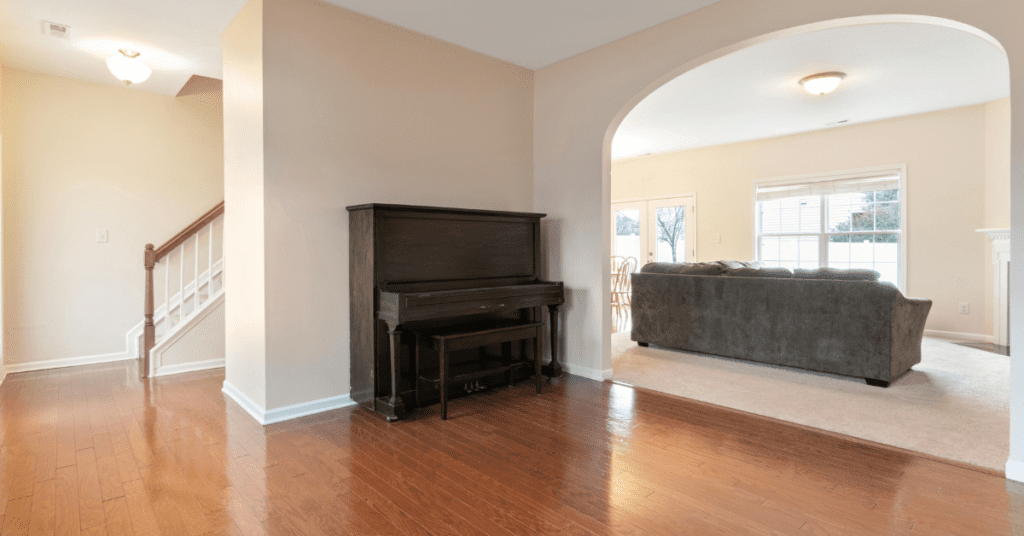
Sweeping the floor is one of those tasks we all assume we know how to do because we’ve been doing it since childhood. But there’s a meaningful difference between a quick pass with a broom and a genuinely effective sweep that leaves your floors truly clean. The right technique, the right tool for your specific floor type, and the right approach for each room make a difference that you can actually see and breathe.
Whether you’re dealing with hardwood, tile, vinyl, laminate, or concrete floors, this complete guide to sweeping the floor covers everything from choosing the right broom to the pro techniques that make every sweep genuinely count. Let’s get sweeping!
Why Sweeping the Floor Properly Actually Matters
Before getting into the how, it’s worth understanding the why, because the reasons that proper floor sweeping matters go well beyond simply having a tidy-looking floor.
Indoor Air Quality and the Dust Redistribution Problem
This is the most underappreciated aspect of floor sweeping and the one that has the most significant health implications. When you sweep incorrectly, too fast, with the wrong tool, using long aggressive strokes, you don’t remove fine dust and particulate matter from your home. You launch it back into the air. Fine dust particles disturbed by sweeping can remain airborne for 20 minutes or more before settling back onto the floor and surrounding surfaces, often in the same areas you just swept. The result is a floor that looks cleaner, but an indoor air environment that’s temporarily worse.
An effective sweeping technique minimizes this redistribution problem. Short, controlled strokes, the right bristle type for your specific floor, and the correct pace all keep fine particles low and moving toward collection rather than launching them into the breathing zone. For households with allergy sufferers, asthma, or anyone sensitive to airborne particulates, this distinction between correct and incorrect sweeping is a genuine health consideration, not just an aesthetic one.
Floor Surface Protection
Beyond air quality, regular and proper sweeping plays a critical role in protecting your floor surfaces from progressive damage. Fine grit, sand, and hard debris on a floor surface act as an abrasive agent underfoot. Every footstep grinds these particles against the floor finish, creating microscopic scratches that accumulate over time into widespread surface dullness. On hardwood floors, this progressive scratching is one of the most common causes of premature finish wear. On tile, it dulls the glaze. On vinyl, it damages the wear layer. On laminate, it degrades the surface coating. Regular sweeping removes this abrasive material before it can cause damage, making it one of the most important floor protection habits available.
The Foundation of Effective Floor Cleaning
Sweeping is the mandatory first step of any effective floor cleaning routine. It must always precede mopping, washing, or any wet cleaning. A floor that hasn’t been swept before mopping traps loose debris under the mop, spreading it across the floor surface in a wet smear that adheres more stubbornly to the floor than the original dry debris. The debris that the mop picks up soils the cleaning solution rapidly, reducing its effectiveness and leaving a dirty mop that redistributes contamination. Always sweep before you mop. Always. This single habit improves every other floor cleaning task you do.
The Compounding Time Savings of Regular Sweeping
There is a direct inverse relationship between sweeping frequency and cleaning effort. A floor swept daily requires a brief, light sweep. The debris accumulation is minimal, and the task takes two to three minutes. A floor left for a week develops accumulated grime, embedded debris, and sticky buildup that requires significantly more effort to address. The daily two-minute sweep is always faster than the weekly ten-minute struggle, and it prevents the kind of progressive floor soiling that requires deep cleaning or professional attention to resolve.
Choosing the Right Broom for Your Floor Type
The single most common reason people sweep ineffectively is using the wrong broom for their specific floor type. A broom that’s ideal for sweeping a tile patio is genuinely damaging to a hardwood floor. A broom that works beautifully on hardwood leaves fine debris behind on textured concrete. Understanding the match between broom type and floor surface is the foundation of effective sweeping.
Soft-Bristle Brooms for Smooth, Sensitive Surfaces
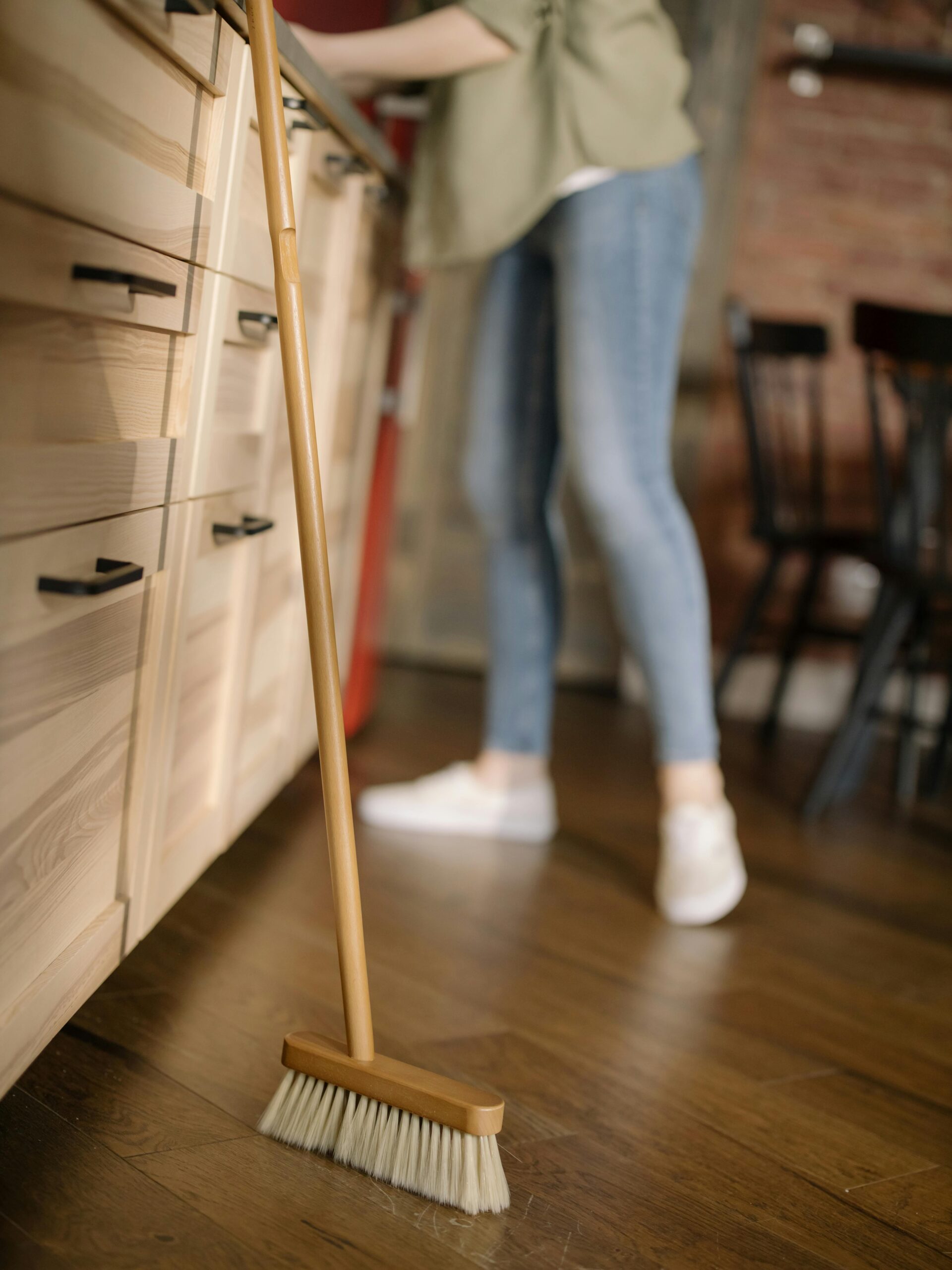
Soft-bristle brooms, made from natural materials like corn fiber, horse hair, or synthetic materials that replicate their gentle flexibility, are designed for smooth, finished floor surfaces. On hardwood, engineered wood, polished laminate, and vinyl plank floors, soft bristles glide across the surface without scratching, gather fine dust and debris effectively, and respect the floor’s finish. The flexibility of soft bristles allows them to conform to minor surface variations, maintaining contact across the full sweep width for consistent debris collection.
For fine dust collection specifically, softer bristles outperform stiffer ones significantly, as the flexibility allows them to capture particles that stiffer bristles simply push ahead of the sweep. If you have a hardwood or any finished smooth floor surface and you’re currently sweeping with a stiff-bristle broom, switching to a soft-bristle design will produce an immediate and dramatically better result.
Stiff-Bristle Brooms for Textured and Outdoor Surfaces
Stiff-bristle brooms, typically made from synthetic materials like polypropylene or natural materials like plant fiber, are designed for rough, textured, or heavily soiled surfaces that require mechanical scrubbing action rather than gentle sweeping. On concrete floors, outdoor patios, brick, stone, and any textured surface with significant surface relief, stiff bristles provide the firmness needed to dislodge debris from texture grooves and surface irregularities. They’re also the appropriate choice for wet sweeping applications, clearing liquid from floors, sweeping mud or heavy organic debris from outdoor surfaces.
On smooth, finished indoor floors, stiff bristles are counterproductive. They lack the flexibility to conform to the floor surface, leave debris behind, and can cause fine scratching of sensitive floor finishes over time with repeated use.
Angle Brooms: The Practical Choice for Most Homes
The angle broom, with its angled cutting edge that creates a long side for open floor sweeping and a short precision edge for corners and edges, is the most versatile broom design for most household applications. The angled design allows the same broom to handle both open floor areas and the corners and edge details that require more precise debris collection. For most homeowners looking for a single broom that handles the majority of their sweeping needs, a quality angle broom in the appropriate bristle stiffness for their floor type is the most practical choice.
Microfiber Dust Mops: Superior Fine Dust Capture
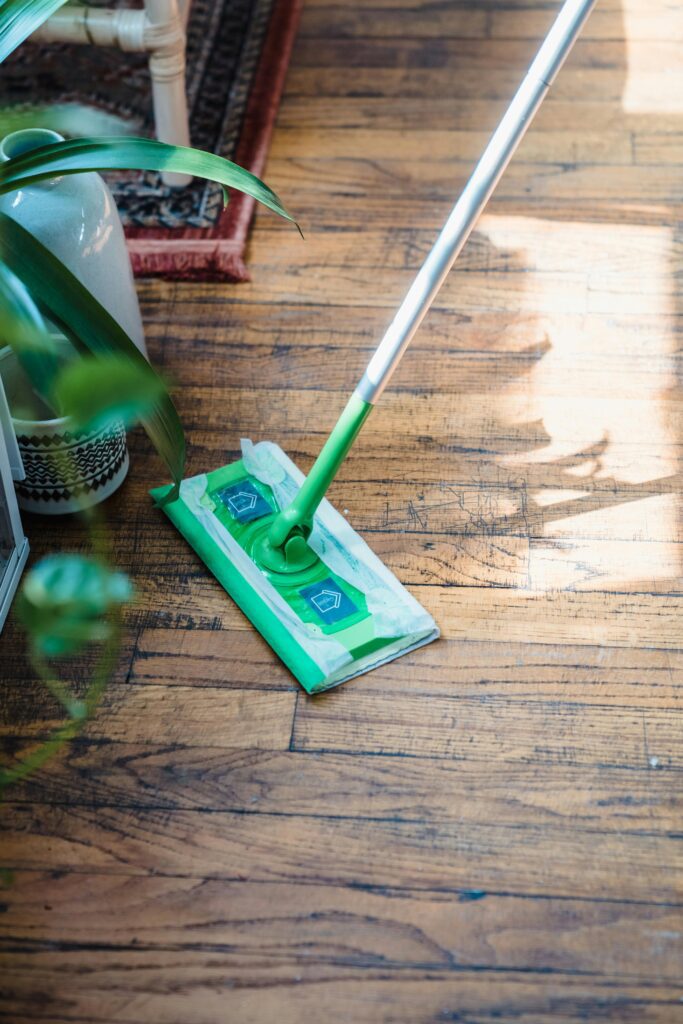
For fine dust collection on smooth hard floor surfaces. Hardwood, vinyl, laminate, polished tile, a microfiber dust mop frequently outperforms a traditional broom. The microfiber material’s microscopic fiber structure creates an enormous surface area that attracts and holds fine dust particles through electrostatic attraction rather than simply pushing them ahead of the sweep. A microfiber dust mop collects and retains fine dust, pet dander, and allergen particles that a traditional broom might disturb into the air. For daily maintenance sweeping on smooth floors, a quality microfiber dust mop is often the superior tool choice.
Broom Width and Room Size
Broom width is a practical efficiency consideration that most people don’t consciously think about, but that meaningfully affects sweeping time. A wide broom, 18 to 24 inches, covers large open floor areas efficiently, completing open-space sweeping in fewer passes. A standard-width broom, 12 to 14 inches, is more maneuverable in tighter spaces, around furniture, and in smaller rooms. Many households benefit from having both a wide broom for open areas like living rooms and kitchens and a standard broom for bathrooms, hallways, and rooms with dense furniture.
The Best Tools for Sweeping Every Type of Floor
Beyond the broom itself, the right supporting tools make sweeping faster, more effective, and more genuinely satisfying.
The Dustpan: More Important Than Most People Think
The dustpan is the piece of sweeping equipment most commonly purchased as an afterthought, a cheap plastic pan grabbed alongside the broom without much consideration. This is a mistake. The quality and design of the dustpan determines how much of the debris you’ve carefully swept into a pile actually gets collected rather than scattering back across the floor the moment you try to lift it.
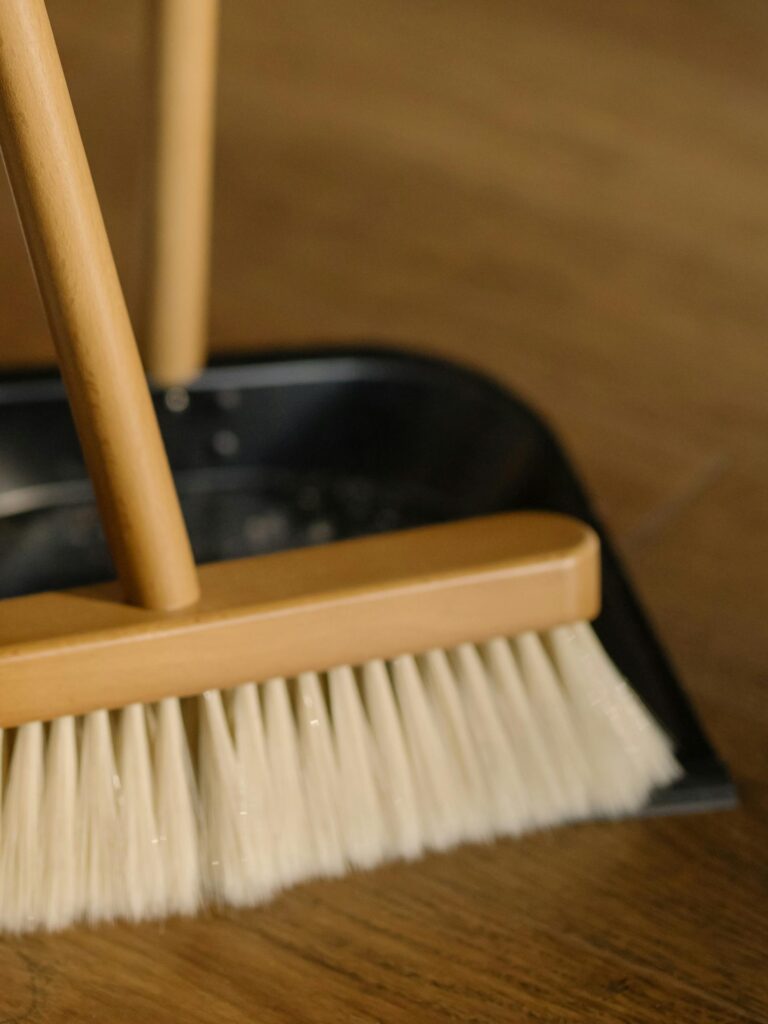
Look for a dustpan with a rubber lip along the collection edge. This seals against the floor surface, preventing debris from sliding underneath rather than into the pan. A wide-mouth dustpan collects larger sweep piles in a single scoop. A long-handled dustpan with a broom attachment, the “stand-up” dustpan design eliminates the back strain of bending down and is one of the most practical sweeping tool upgrades available for any household. And a dustpan with a comb attached to the rear panel, for cleaning broom bristles, addresses one of the most common broom maintenance failures.
Electric Brooms and Cordless Sweepers
Cordless electric brooms, essentially lightweight cordless stick vacuums with sweeping functionality, bridge the gap between traditional brooms and full-size vacuum cleaners. For quick daily sweeping on smooth hard floors, they offer the speed advantage of a vacuum. No dust clouds, immediate debris containment, with the lightweight, no-setup convenience of a broom. The Bissell Featherweight, the Black and Decker Dustbuster, and similar cordless sweeper designs are popular for kitchen floors and other smooth surfaces for daily maintenance.
Their limitation is suction power. They’re not designed for carpet, deep debris removal, or the kind of thorough cleaning that a full-size vacuum provides. For daily hard floor maintenance sweeping, they’re genuinely useful. For anything more demanding, a traditional broom or vacuum is the appropriate tool.
Robot Vacuums as Daily Sweeping Alternatives
A robot vacuum set to run daily on hard floors is a genuinely effective alternative to daily manual sweeping, removing the debris accumulation that causes progressive floor damage before it has time to compact or become embedded. The practical benefit is removing the daily sweeping task from your personal to-do list entirely. The limitation is that robot vacuums don’t replace the intentional, systematic sweeping that happens before mopping, around furniture that the robot has been blocked from accessing, or in spaces where the robot can’t deploy effectively.
For households with significant hard floor coverage, a robot vacuum running daily alongside a weekly intentional sweep before mopping represents the most efficient approach to floor maintenance currently available.

How to Sweep the Floor Properly: Step-by-Step Technique
Here is the complete, correct technique for sweeping any hard floor effectively. The approach that actually collects debris rather than redistributing it.
Step 1: Prepare the Floor Before You Begin
Before the first stroke of the broom, spend 60 seconds preparing the space. Pick up any objects from the floor, shoes, bags, toys, and pet bowls, and place them elsewhere temporarily. Move lightweight furniture items like dining chairs away from the floor area you’re sweeping. If you can’t move heavier furniture, make sure you can reach under it with the broom at least partially. Opening the broom closet and getting everything in position before you start means the actual sweeping is uninterrupted and systematic rather than repeatedly paused.
Step 2: Start From the Edges and Corners
This is the single most important technique correction for people who currently sweep ineffectively. Most people start sweeping in the middle of the room and work outward, which is exactly backward. Corners and edges are where debris concentrates most heavily, dust balls accumulate in corners, crumbs migrate to baseboards, and fine debris settles along the edges of the room where foot traffic is lightest. Starting your sweep at the room’s perimeter, using the short precision edge of your angle broom to dislodge debris from corners and work it away from the baseboard, ensures that the heaviest debris concentrations are addressed first, before the sweeping motion carries them to the collection point.
Work systematically around the entire room perimeter, dislodging debris from corners and edges and moving it toward the center of the room, before transitioning to the open floor area.
Step 3: Use Short, Controlled Strokes
This is the technique element that most directly determines whether your sweep removes debris or redistributes it into the air. Long, aggressive sweeping strokes, the instinctive “push it all in one big swoop” approach, generate air movement that lifts fine particles and sends them airborne. Short, controlled strokes, moving the broom approximately 18 to 24 inches per stroke, maintaining contact with the floor throughout, and lifting gently at the end of each stroke rather than flicking, keep debris low and moving consistently toward the collection point without launching it into the breathing zone.
Think of effective sweeping as rolling debris gently along the floor toward the pile rather than pushing it forcefully across the surface. The slower, more deliberate pace is counterintuitive but produces dramatically better debris collection, particularly for fine dust and small particles that become airborne with aggressive technique.
Step 4: Work Systematically Toward a Collection Point
Once the edges and corners are cleared, work across the open floor area in systematic parallel passes, starting from the wall furthest from your designated collection point and working toward it. Your collection point should be either the center of the room or the doorway through which you’ll carry the collected debris. Work in parallel passes that overlap slightly, ensuring complete coverage of the floor area without leaving uncleaned strips between passes.
For large open floor areas, breaking the space into manageable sections, sweeping the first half to a central collection point, then the second half to the same point, keeps the growing debris pile from becoming unwieldy before you reach the dustpan.
Step 5: Use the Dustpan Correctly
The dustpan technique matters more than most people appreciate. Place the dustpan on the floor with its rubber lip pressed firmly against the floor surface. This seal prevents the debris from sliding under the pan edge rather than into it. Use short, gentle broom strokes to guide the pile into the pan rather than one aggressive push that scatters debris around the pan edges.
For the final sweep into the pan, many experienced cleaners use a slightly damp broom for the last stroke. The minimal moisture helps fine particles stick to the bristles and transfer cleanly into the pan rather than floating away. Close the pan gently and carry it directly to the waste bin, don’t walk it across the room with debris peeking over the lip at risk of spilling back onto the floor you just cleaned.
Step 6: The Final Pass
Professional cleaners almost always make a final light pass after the main sweep. A quick, gentle once-over of the entire floor to capture the fine particles disturbed during sweeping that have settled back onto the surface. This final pass with a microfiber dust mop or a barely damp soft broom collects what the main sweep disturbed into the air and returned to the floor. It adds less than a minute to the total sweeping time and produces a noticeably cleaner result than stopping at the main sweep.
How to Sweep Different Floor Types Correctly
Hardwood Floors
Hardwood floors require the gentlest sweeping approach of any indoor surface. Use a soft-bristle broom or microfiber dust mop, never a stiff-bristle broom that can cause fine surface scratching over time. Sweep in the direction of the wood grain, typically lengthwise along the planks, which guides debris out of the grain channels rather than pushing it deeper in. Use short, light strokes and maintain consistent, gentle floor contact throughout each stroke. The goal on hardwood is to collect debris with minimal disturbance to the surface. Imagine you’re gently gathering rather than forcefully sweeping.
Never use a damp broom on hardwood floors for the main sweep. Water introduced through the broom bristles can penetrate the finish and cause moisture damage to the wood. A microfiber dust mop with no moisture is the safest and most effective daily sweeping tool for hardwood.
Tile and Grout Floors
Tile floors present a unique sweeping challenge because the grout lines between tiles create channels where fine debris settles and accumulates, channels that a flat broom head passes over without fully addressing. On tile floors, use a broom with slightly stiffer, more flexible bristles that conform to the surface relief and reach partially into grout channels. A rubber broom with flexible bristles is particularly effective on tile. For this reason, the rubber material contacts the tile surface in all its topographical detail, including the slight depression of grout lines, more effectively than stiffer synthetic bristles.
Pay extra attention to the sweeping direction on the tile. Sweeping at a slight diagonal to the grout line pattern is more effective than sweeping parallel to it, as the diagonal angle causes the bristles to cross grout lines rather than follow them.
Vinyl and Laminate Floors
Vinyl and laminate floors are among the most sensitive to abrasive damage from improper sweeping. The wear layer on these surfaces scratches more readily than hardwood or tile finishes. Use a soft microfiber dust mop or a soft-bristle broom, and be particularly careful about ensuring the floor is swept before any wet cleaning. The fine grit that accumulates on vinyl and laminate under a wet mop is responsible for a significant proportion of surface wear layer damage reported by homeowners.
For textured vinyl plank with surface embossing that mimics wood grain, sweep in the direction of the embossed pattern to work debris out of the texture rather than pressing it into the surface relief.
Concrete Floors
Concrete requires a stiff-bristle broom with enough body to dislodge debris from the rough, porous concrete surface. Use firm, methodical strokes. Concrete can handle the more aggressive sweeping technique that softer floor finishes prohibit. For concrete garage floors with oil stains or heavy debris, a push broom with stiff synthetic bristles and a wide head provides the most efficient coverage. On sealed or polished concrete, increasingly common as a design choice in modern homes, treat it more like tile and use a medium-stiffness broom rather than a heavy-duty push broom.
Outdoor Areas
Outdoor sweeping, such as patios, decks, driveways, and entryways, typically requires a stiff outdoor broom designed for the debris loads and surface types involved. Leaf debris on a wooden deck sweeps most effectively with a medium-stiffness outdoor broom using long, efficient strokes that gather leaves toward a collection point rather than blowing them around. Concrete driveways and paths benefit from a push broom with stiff bristles that move heavier debris, gravel, tracked-in soil, and organic debris efficiently across larger surface areas.
For entryways specifically, the transition between outdoor and indoor surfaces, regular sweeping of the mat and the surrounding floor area, prevents outdoor debris from being tracked into the home on subsequent footsteps.
How Often Should You Sweep the Floor?
The right sweeping frequency depends on the room, the household, and the specific conditions that generate floor debris, but there are evidence-based guidelines that apply to most homes.
Daily Sweeping: The Kitchen is Non-Negotiable
The kitchen floor accumulates food debris, fine crumbs, cooking residue, and dust at a rate that no other room in the house matches. A daily sweep in the kitchen, taking two to three minutes with the right broom, prevents the progressive buildup of food debris that becomes sticky, attracts bacteria, and requires aggressive cleaning to address once established. If there is one floor in your home that you sweep daily, make it the kitchen. The difference in floor condition and hygiene between a daily-swept kitchen and a weekly-swept kitchen is significant and visible.
Daily or Twice Weekly: High-Traffic Rooms
Entryways and hallways accumulate outdoor grit and debris from foot traffic at a rate that makes daily or every-other-day sweeping appropriate. The outdoor grit tracked in on shoes is one of the most damaging things that reaches your indoor floors. It’s abrasive and, if not swept up promptly, gets ground into floor surfaces by subsequent foot traffic. Sweeping entryways and high-traffic hallways frequently is one of the most effective floor protection habits available.
Weekly: Lower-Traffic Spaces
Living rooms, bedrooms, and other lower-traffic spaces accumulate dust, pet hair, and general debris more slowly than kitchens and entryways. A weekly sweep is typically sufficient to maintain these rooms in good condition. Combine the weekly sweep with a thorough dusting of furniture and surfaces so that the disturbed dust settles before the floor is swept.
Adjusting for Pets and Children
Households with pets, particularly heavy-shedding dogs or cats, need more frequent sweeping than the baseline guidelines suggest. Pet hair accumulates rapidly and, if left for several days, combines with fine dust to form the dust balls and hair mats that are harder to sweep cleanly than fresh debris. Daily sweeping in a pet household is the most practical approach to keeping floors in a manageable condition. Similarly, households with young children who eat, play, and move through the home in ways that generate consistent floor debris benefit from more frequent sweeping than households without children.
Floor Sweeping Hacks That Save Time and Effort
These practical hacks make sweeping faster, more effective, and more satisfying in daily use.
The Slightly Damp Broom Hack
For the final pass of any sweep, particularly on smooth hard floors, slightly dampening the broom bristles before the last stroke helps fine dust and particles adhere to the bristles rather than floating away. Don’t wet the broom. A barely damp bristle, achieved by a quick pass through a lightly misted mist or a brief contact with a damp cloth, is all you need. On hardwood floors, skip this hack. Even minimal moisture from the broom introduces more moisture risk than the benefit justifies.
The Rubber Broom for Pet Hair
A rubber broom, with rubber bristles rather than synthetic or natural fiber, is remarkably effective for pet hair collection on hard floors. The rubber creates a static attraction to hair and fine debris that synthetic bristles don’t match, gathering pet hair into manageable clumps that collect cleanly rather than distributing along the bristle length. If pet hair on hard floors is a persistent challenge, a rubber broom kept specifically for pet hair that passes between full sweeps is one of the most practical tool additions available.
Sweep in One Consistent Direction
Always sweep in one consistent direction relative to the room, working from the back wall toward the exit, or from left to right across the space. Changing direction mid-sweep scatters debris that the previous strokes collected rather than building the pile toward the collection point. Establishing a consistent direction before you begin and maintaining it throughout the sweep produces a cleaner, faster result.
Under-Furniture Sweeping Without Moving Everything
An extendable broom handle or a flat-head microfiber dust mop with a swivel head reaches under most standard furniture. Sofas, beds, dressers, without requiring you to move the furniture entirely. For the daily maintenance sweep, reaching under furniture with an extendable tool is faster and more practical than moving pieces. For the weekly thorough sweep, moving lightweight furniture and sweeping the full floor beneath is worth the additional time for the more complete cleaning result it produces.
The Doormat Pre-Sweep
Sweeping the doormat before sweeping the entryway floor prevents the mat from redepositing debris onto the freshly swept floor when it’s replaced. Shake the mat outdoors first, then sweep the floor. This sequence, always mat before floor, keeps entryway floors consistently cleaner with each sweeping session.
Common Floor Sweeping Mistakes to Avoid
Starting in the Middle of the Room
As established in the technique section, starting from the middle of the room and working outward is the most common sweeping mistake and the one with the greatest impact on sweeping effectiveness. Debris concentrates at room edges and in corners, starting there and working inward is the correct sequence that ensures the heaviest accumulations are collected first.
Long, Aggressive Strokes
Long, forceful sweeping strokes generate the air movement that launches fine dust particles into the breathing zone. Short, controlled strokes keep debris low and moving consistently toward the collection point. This single technique change, from long to short strokes, produces the most immediate improvement in sweeping effectiveness for most people.
Using the Wrong Broom for the Floor Type
A stiff-bristle outdoor broom on hardwood floors. A soft-bristle fine broom on rough concrete. A narrow broom in a large open kitchen. Any of these mismatches reduces sweeping effectiveness and, in the case of stiff bristles on sensitive finished floors, causes progressive surface damage that compounds over time. Matching the broom to the floor type is the most important equipment decision in sweeping.
Sweeping Too Quickly
Speed is the enemy of effective sweeping. Too fast a pace generates air disturbance that redistributes fine particles, misses debris between strokes, and produces the unsatisfying result of a floor that looks swept until the light hits it from a certain angle. Slow down by about 30 percent from your natural sweeping pace, and the improvement in collection completeness is immediately apparent.
Neglecting Broom Maintenance
A broom with bent, matted, or debris-clogged bristles sweeps ineffectively regardless of technique. The bristle condition determines the broom’s ability to maintain floor contact and collect debris. Clean broom bristles monthly, remove tangled hair and debris by hand or with a cleaning comb, wash synthetic bristle brooms with warm water and mild soap occasionally, and allow to dry completely before storage. Replace brooms when bristles are permanently bent, significantly matted, or have shed to a point where the bristle density is insufficient for effective sweeping.
Incorrect Dustpan Technique
Sweeping debris into a pile and then scooping it aggressively into the dustpan scatters as much as it collects. Use the rubber-lip seal of the dustpan firmly against the floor, guide debris gently into the pan with short final strokes, and handle the full dustpan carefully to avoid spilling its contents back onto the clean floor.
Sweeping vs. Vacuuming: Which Is Better for Your Floor?
This is one of the most commonly asked floor care questions, and the honest answer is that both have genuine strengths that make them complementary rather than competing approaches.
What Sweeping Does Better
Sweeping is faster to deploy than vacuuming, no cord to unravel, no machine to bring out, and no power needed. For quick daily maintenance on hard floors with light debris, sweeping is often the more practical choice simply because the low friction to starting the task means it actually gets done rather than being deferred. Sweeping is also quieter, a meaningful consideration for early morning or late evening cleaning that would disturb sleeping household members. And sweeping is gentler on hard floor surfaces than vacuum beater bars, which is important for sensitive finished surfaces like hardwood and vinyl.
What Vacuuming Does Better
Vacuuming provides suction that contains debris rather than disturbing it, the fundamental advantage over sweeping for fine dust and allergen management. A quality vacuum with HEPA filtration captures fine particles in its dustbin rather than launching them briefly into the air before they settle. Vacuuming is far more effective on carpet than sweeping, which essentially cannot address carpet debris at all. And for homes with significant pet hair, vacuuming’s suction is more effective than sweeping at capturing hair from hard floor surfaces.
The Most Effective Combined Approach
For most households with hard floors, the most effective floor care routine combines both: daily sweeping or microfiber dust mopping for quick debris removal maintenance, weekly vacuuming for thorough fine dust and allergen capture, and sweeping before any mopping session to prepare the floor for wet cleaning. This combination addresses the full spectrum of floor debris types, large particles, fine dust, allergens, and embedded contamination more effectively than either approach alone.
Maintaining Your Sweeping Tools for Best Performance
Cleaning Your Broom Regularly
A broom used regularly accumulates hair, fine dust, and debris in its bristles, all of which reduce sweeping effectiveness and transfer old contamination back onto supposedly clean floors. Remove tangled hair from bristles monthly using a cleaning comb, an old toothbrush, or by hand. For synthetic bristle brooms, wash occasionally by swishing the bristle end in a bucket of warm water with a small amount of mild detergent, rinse thoroughly, and allow to dry completely before storing. Damp bristles develop bacterial growth and odor.
Storing Brooms Correctly
Never store a broom resting on its bristles. The contact with the floor gradually bends the bristles permanently, reducing their sweeping contact and collecting ability. Hang brooms from a wall hook or broom holder that suspends them with the bristles clear of any surface. Broom holders that mount to the wall with clips or hooks are inexpensive, widely available, and preserve the broom’s bristle shape through the broom’s entire lifespan.
When to Replace Your Broom
Replace a broom when the bristles are permanently bent or matted. No amount of washing or reshaping restores permanently deformed bristles to effective sweeping shape. Replace when bristle density has reduced through shedding to a point where the broom leaves obvious gaps in its sweep pattern. And replace when the bristle material has degraded, stiffened, cracked, or become brittle with age, to the point where it no longer conforms to the floor surface effectively. A quality broom properly maintained and stored correctly should last one to three years in normal household use.
Dustpan Maintenance
Wash dustpans with warm, soapy water weekly. Dustpans accumulate fine dust and bacteria in their collection surface and handle junction. Dry thoroughly before storage. Replace dustpans when the rubber lip edge is cracked, stiff, or no longer seals effectively against the floor surface, a damaged rubber lip is the primary cause of debris escaping collection at the dustpan edge.
Conclusion
Sweeping the floor might seem like the simplest cleaning task in the home, but done properly, with the right tool for your floor type and the right technique for your specific space, it’s the foundation of genuinely clean, well-maintained, and healthy floors in every room. The difference between a quick, careless pass and a systematic, technique-driven sweep is immediately visible in the result, and felt in the air quality of the space.
Start with the fundamentals. Get the right broom or microfiber dust mop for your floor type. Always start from the corners and edges and work inward. Use short, controlled strokes rather than long, aggressive pushes. Use a quality dustpan with a rubber lip and handle it carefully. Build a sweeping frequency that matches your specific household, daily in the kitchen, regularly in high-traffic areas, weekly everywhere else.
These aren’t complicated changes. But their cumulative impact on the cleanliness of your floors, the condition of your floor surfaces, the air quality of your home, and the effort required for all your other floor cleaning tasks is genuinely significant. Clean floors start with a proper sweep. And now you have everything you need to make every single sweep genuinely count!