Here’s the thing about robot vacuum cleaners in 2026: the market has evolved so dramatically that choosing the right one has become genuinely complex. We’re no longer talking about a simple disc that bumps around your floor picking up dust. Today’s robot vacuums feature sophisticated laser mapping, AI-powered obstacle avoidance, automatic self-emptying bases, built-in mops, multi-floor memory, and integration with every major smart home ecosystem. The options are extraordinary. And so is the potential for buying the wrong one for your specific needs.
That’s exactly why this guide exists. Whether you’re buying your first robot vacuum cleaner, upgrading from an older model, or trying to figure out which of the dozens of available options actually suits your home, your floors, and your lifestyle, this complete guide covers everything you need to know.
This article contains affiliate links. If you buy through these links, DomusFlux may earn a small commission at no extra cost to you.
What Is a Robot Vacuum Cleaner and How Does It Work?
Understanding how a robot vacuum cleaner actually works. The mechanics, the navigation, and the intelligence help you make a genuinely informed purchase decision and set realistic expectations for what the device will and won’t do in your home.
The Basic Mechanics
At its core, a robot vacuum cleaner is a disc-shaped autonomous cleaning device that combines suction, brushes, and sensors to clean floor surfaces without human operation. The mechanical system consists of a main brush roll or bristle brush positioned at the underside center or front of the device, one or two spinning side brushes that sweep debris from edges and corners toward the main brush, a suction motor that draws the debris up from the main brush into the dustbin, and a filtration system that captures fine particles before the exhaust air is expelled back into the room.
The motors in modern robot vacuums have become significantly more powerful over the past several years. Entry-level models typically offer 1,500 to 2,000 Pa of suction. Mid-range models deliver 3,000 to 5,000 Pa. And premium models in 2026 offer suction ratings of 10,000 Pa and above. More than sufficient for deep carpet cleaning and the kind of debris removal that previously required a full-size upright vacuum.
Navigation Technology: From Bumping to Intelligence
The navigation technology in robot vacuums is where the most dramatic evolution has occurred over the past decade, and understanding the different approaches helps explain why there’s such a significant performance difference between price tiers.
First-generation robot vacuums used a random bounce navigation pattern. The device would travel in a straight line until it encountered an obstacle, turn at a random angle, and continue. This approach eventually cleaned a room through sheer persistence, but was inefficient, left areas inconsistently covered, and could not learn or remember the space. These devices still exist in the budget category and have their place in simple, small, open-plan spaces.
Gyroscope navigation, used in many entry and mid-level devices, provides a meaningful improvement. The gyroscope tracks the device’s rotation and movement, allowing it to clean in more systematic patterns, typically a back-and-forth boustrophedon pattern similar to how a lawn mower covers a lawn. Coverage is more consistent and efficient than random bounce, but the device has no map of the space and cannot localize itself precisely if it becomes lost.
Camera-based VSLAM (Visual Simultaneous Localization and Mapping) navigation uses a downward or upward-facing camera to capture visual landmarks in the room and build a map based on those landmarks. This allows the robot to localize itself accurately within a room and navigate systematically. VSLAM is effective in well-lit environments but can struggle in low-light conditions where the camera’s ability to capture reliable landmarks is reduced.
LiDAR (Light Detection and Ranging) navigation is the premium navigation technology that has become the benchmark for high-performance robot vacuums. A rotating laser sensor at the top of the device emits thousands of laser pulses per second, measuring the distance to every object in the room and building a precise geometric map of the space in real time. LiDAR works in complete darkness, is unaffected by lighting conditions, and produces the most accurate maps of any navigation technology available in consumer robot vacuums. The characteristic spinning turret on top of LiDAR-equipped robot vacuums is the laser sensor module.
Mapping, Memory, and Intelligence
Once a robot vacuum has built a map of your home, it stores that map in its memory and uses it for all subsequent cleaning sessions. Modern robot vacuums can store multiple floor maps: the ground floor, the first floor, and any additional levels, and automatically detect which floor they’re on when placed on a new level. Within each map, the robot vacuum can identify individual rooms, allow you to name them, and accept instructions for room-specific cleaning, clean the kitchen only, skip the bedroom, or prioritize the living room.
The intelligence layer continues to evolve. AI-powered object recognition available on premium models from Shark, Roborock, and iRobot allows the robot vacuum to identify and avoid specific objects in its path: shoes, socks, cables, pet waste, children’s toys, and other common obstacles that earlier navigation systems would simply run into. This represents a fundamental shift from obstacle detection, knowing something is in the way, to obstacle identification, knowing what is in the way and responding appropriately.
Smart Home Integration
Every major robot vacuum brand now offers full integration with the leading smart home ecosystems. Amazon Alexa, Google Home, and Apple HomeKit compatibility allow voice control of your robot vacuum. To start cleaning, return to the dock, clean the kitchen through your existing smart home infrastructure. IFTTT integration enables automated responses to external triggers, such as starting cleaning when everyone leaves the house, for example, by linking to a presence detection system. The robot vacuum has become a genuinely integrated component of the smart home rather than a standalone appliance.
What Are the 3 Best Robot Vacuum Cleaners?
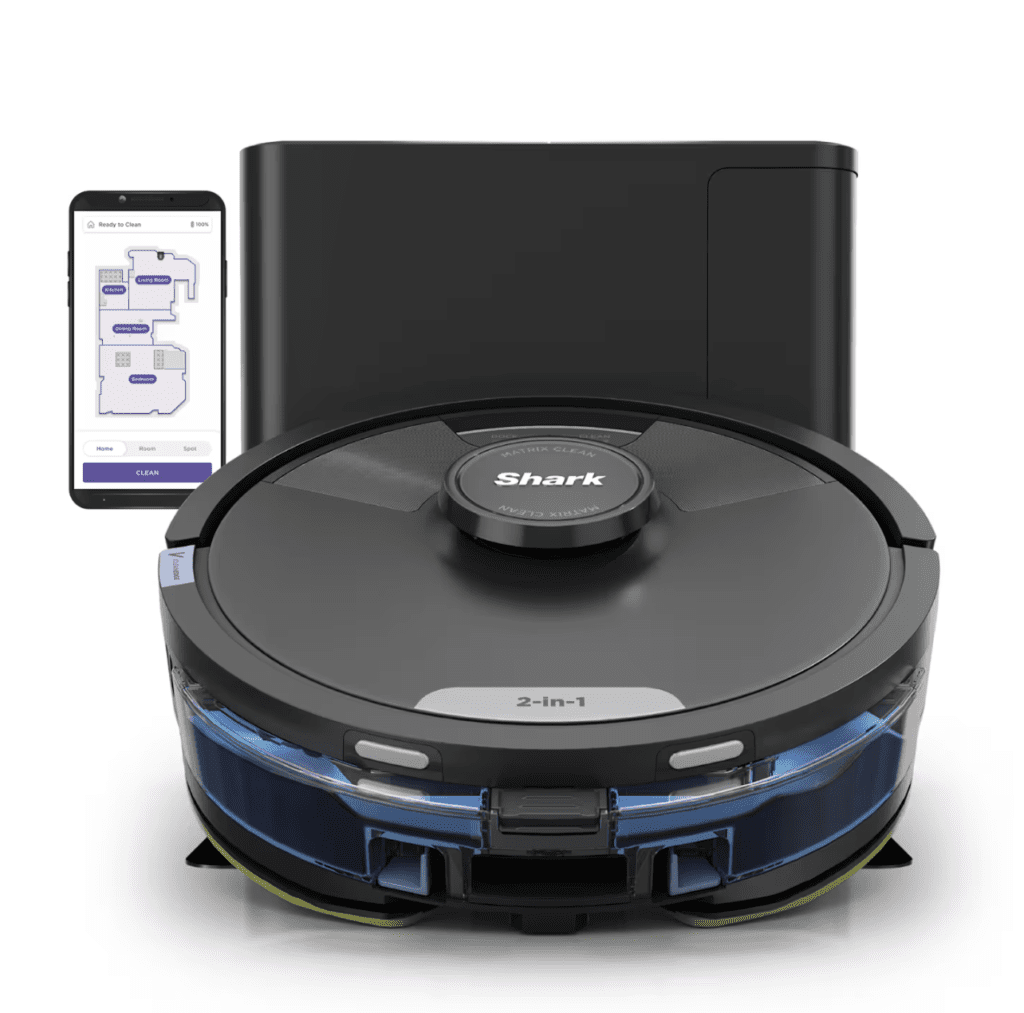
1. Shark Matrix™ Plus 2-in-1 Self-Empty Robot Vacuum and Mop
Best Overall Robot Vacuum.

Lucas’ Take
If you’re looking for a robot vacuum that genuinely does it all without breaking the bank, the Shark Matrix Plus 2-in-1 is my top pick. It vacuums, it mops, and it even empties itself, so you can basically set it and forget it. What I love most is the Matrix Clean pattern: instead of randomly bumping around your floors, this robot cleans in a smart grid so it never misses a spot. Add HEPA filtration and a bagless self-empty base that holds 60 days of dirt, and you’ve got a seriously capable machine for the price. It’s not the flashiest robot on this list, but it’s the one I’d recommend to pretty much anyone.
Best for: Everyone
Price: $ 349,99
Promotion: 50% Discount
Key Features
- Matrix Clean: cleans in a precise grid pattern, taking multiple passes to make sure nothing gets missed
- Sonic Mopping: scrubs hard floors 100 times per minute for a deeper clean than a basic wet pad
- XL HEPA Self-Empty Base: holds up to 60 days of dirt and traps 99.97% of dust and allergens
- 360° LIDAR Navigation: scans your home to build an accurate map and avoids obstacles day and night
- CleanEdge Detect: uses air blasts to pull dirt out of edges and corners before vacuuming it up
- Matrix Mop Mode: targets stubborn stains on hard floors with 50% better stain cleaning in specific zones
- Recharge & Resume: automatically recharges and picks up exactly where it left off
- SharkClean App: set schedules, no-go zones, and specific areas to clean from your phone
What I Like
- Excellent value for a vacuum-and-mop combo with self-emptying included
- Matrix Clean pattern gives more complete floor coverage than most competitors
- Bagless self-empty base, no need to keep buying replacement bags
- HEPA filtration is great for allergy sufferers or pet owners
- Works well on both carpets and hard floors in one session
- Easy to control through the SharkClean app or voice assistants
- CleanEdge feature tackles corners and edges that most robots miss
What I Dislike
- Mop pad requires manual cleaning, no automatic mop washing like higher-end models
- The battery life of around 110 minutes may not cover very large homes in one go
- Sonic mopping is effective but not as powerful as oscillating or rotating mop systems
- The self-empty base is bagless, which can release some dust when emptying if not careful
- Only supports 2.4GHz Wi-Fi, won’t connect to 5GHz networks
Why It’s The Best Overall
The Shark Matrix Plus offers a complete vacuum-and-mop combo with Matrix Clean precision coverage, HEPA self-empty base, sonic mopping, LIDAR navigation, and CleanEdge detect. The best all-round package for the widest range of households.
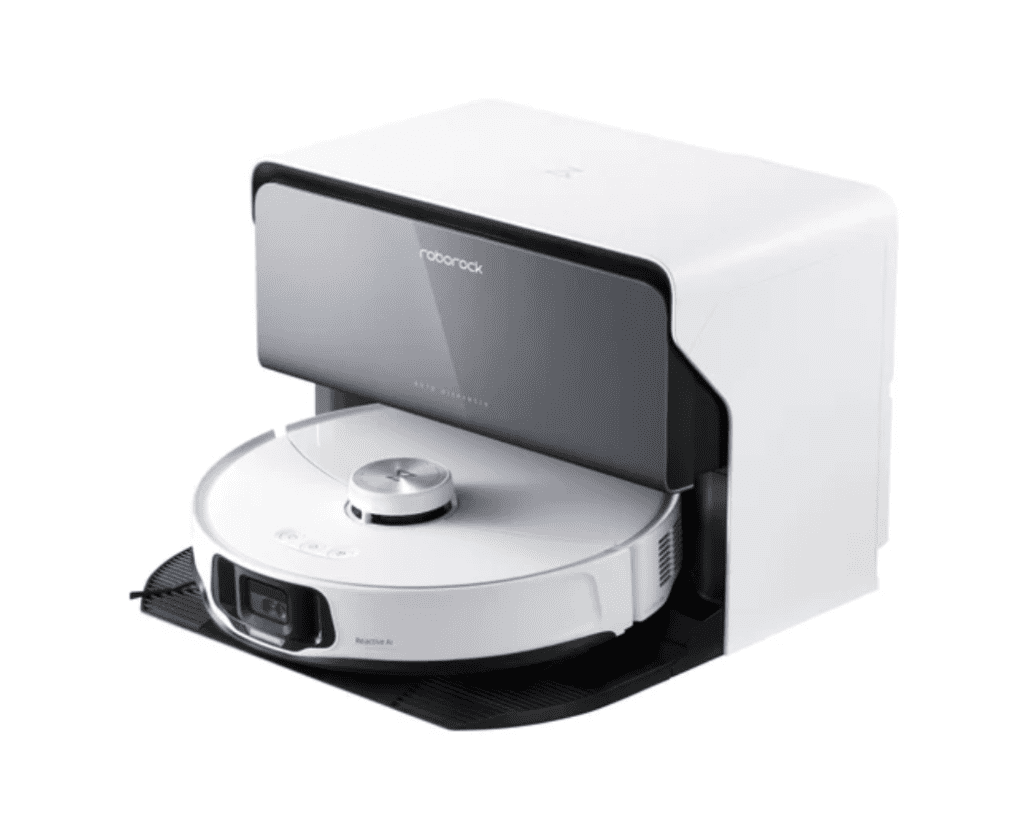
2. Roborock S8 MaxV Ultra
Best Premium Robot Vacuum.

Lucas’ Take
If money is no object and you want the most hands-free robot vacuum experience possible, the Roborock S8 MaxV Ultra is in a league of its own. What makes it truly special is the Refill & Drainage System, which you can actually plumb directly into your water supply and drain, meaning it fills itself with fresh water and drains the dirty water automatically. No tanks to fill, no water to empty. Ever. Additionally, it washes its mop pads in 140°F hot water, dries them with hot air, dispenses its own detergent, and empties its own dustbin. Honestly, once it’s set up, you barely need to touch it.
Best For: Premium Pick
Price: $ 849,99
Promotion: 55% Discount
Key Features
- 8-in-1 RockDock® Ultra with Refill & Drainage System: connects directly to your water supply and drain for truly hands-free operation
- Hot Water Mop Washing: washes mop pads with up to 140°F hot water to remove grease and bacteria
- Heated Air Drying: dries the mop pads with hot air to prevent mold and bad odors
- Auto Detergent Dispenser: automatically adds cleaning solution with a 580ml tank that lasts over 3 months
- 10,000 Pa HyperForce® Suction: industry-leading suction power that picks up even the finest dust and debris
- Reactive AI 2.0 Obstacle Recognition: uses 3D structured light and an RGB camera to recognize and avoid 73 types of objects, including pet waste
- FlexiArm Design™ Side Brush: automatically extends into corners and under furniture for 100% concave corner coverage
- VibraRise® 3.0 Mopping System: scrubs floors 4,000 times per minute and lifts the mop to 20mm when crossing carpet
- PreciSense® LiDAR Navigation: builds a detailed map of your home for the most efficient cleaning route
- Built-in Voice Assistant: just say “Hello Rocky” to start cleaning without needing your phone or network connection
- Pet Snaps & Pet Search: takes photos of your pets during cleaning and can actively search for them on command
- DirTect™ Technology: detects how dirty an area is and automatically adjusts suction, mopping intensity, and cleaning passes
What I Like
- The most hands-free robot vacuum you can buy, with almost zero maintenance once set up
- Hot water mop washing actually cleans the mop pads properly, not just rinses them
- Refill & Drainage System eliminates the need to ever touch a water tank
- 10,000 Pa suction is genuinely powerful on both carpets and hard floors
- AI recognizes 73 obstacle types, one of the most advanced avoidance systems available
- FlexiArm side brush reaches corners and under furniture that most robots miss
- Built-in voice assistant works even without Wi-Fi
- Fun pet features like Pet Snaps and Pet Search are a nice bonus for animal lovers
What I Dislike
- Very expensive, this is a serious investment compared to most robot vacuums
- The Refill & Drainage System requires professional-style plumbing installation, not for everyone
- Only supports 2.4GHz Wi-Fi, won’t connect to 5GHz networks
- The dock is large and takes up noticeable space in your home
- Setup and installation are more complex than plug-and-play alternatives
- Overkill for smaller homes or light cleaning needs
Why It’s The Best Premium Pick
The most technically complete robot vacuum on the list, 10,000 Pa suction, 8-in-1 RockDock Ultra with hot water mop washing, heated drying, auto detergent dispenser, FlexiArm side brush, Reactive AI 2.0, and the unique refill & drainage system for fully plumbed hands-free operation.
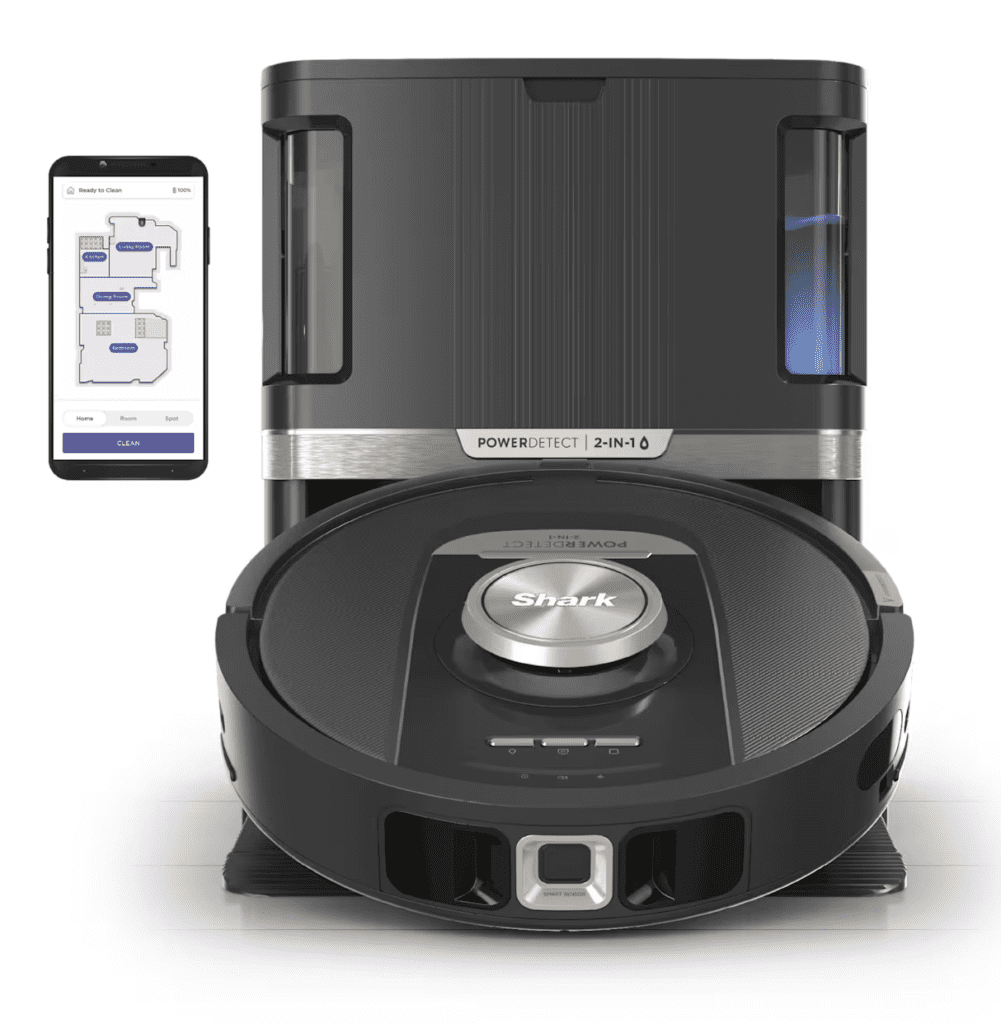
3. Shark PowerDetect 2-in-1 Robot Vacuum and Mop with NeverTouch Pro Base
Best for Smart Home Integration.
Lucas’ Take
The Shark PowerDetect is what happens when Shark really pushes the boundaries. This robot doesn’t just vacuum and mop, it actually thinks about how to clean. It detects what type of floor it’s on, senses hidden dirt, spots stains, and automatically adjusts its cleaning to match. The NeverTouch Pro base washes and dries the mop pad, refills its own water tank for up to 30 days, and empties debris for up to 60 days. One of the coolest tricks? NeverStuck Technology lets the robot physically lift itself over thresholds and obstacles, so it never gets stuck.
Best For: Smart Home Integration
Price: € 499,99
Promotion: 50% Discount
Key Features
- 5 PowerDetect Technologies: DirtDetect, StainDetect, FloorDetect, EdgeDetect, and NeverStuck work together for a smarter, more adaptive clean
- NeverTouch™ Pro Base: automatically empties debris (60-day capacity), refills water tank (30-day capacity), and washes and dries the mop pad after every clean
- DirtDetect: senses hidden dirt and automatically boosts suction and adds extra cleaning passes in dirtier areas
- StainDetect: spots stains on hard floors and increases mopping intensity to tackle them
- FloorDetect: recognizes what type of floor it’s on and optimizes the brush roll and mopping accordingly
- NeverStuck Technology: physically lifts the robot over thresholds, obstacles, and carpet edges so it never gets stuck
- EdgeDetect: blasts air from corners and edges to pull debris into the robot’s cleaning path
- 360° LiDAR + 3D Sensor: builds an accurate home map and detects objects and furniture, even in the dark
- Odor Neutralizer Technology: traps and neutralizes odors in the base for a fresher-smelling home
- HEPA Filtration: captures 99.97% of dust and pet allergens down to 0.3 microns
- Carpet Avoidance While Mopping: detects carpet using an ultrasonic sensor and lifts the mop pad to avoid wet carpet messes
- SharkClean App: schedule cleanings, set no-go zones, and control everything via app or voice assistant
What I Like/Dislike
- Five smart detection technologies make this one of the most adaptive robot vacuums available
- NeverStuck Technology is genuinely impressive. It rarely, if ever, gets stuck
- Mop pad extends beyond the robot’s edge for better cleaning along walls
- Odor neutralizer is a nice touch, especially for pet owners
- 30-day water refill means very little maintenance for a full month
- Works well on both carpets and hard floors without any manual switching
- Intuitive app praised by reviewers for being simple and easy to use
What I Dislike
- Expensive, one of the pricier options on this list
- Suction power reportedly struggles with very fine debris, like flour, on hard floors
- No way to manually adjust mopping wetness; it controls this automatically, which some users may find too wet
- Obstacle avoidance can be slightly oversensitive at times, causing unnecessary detours
- Only supports 2.4GHz Wi-Fi, no 5GHz support
- The NeverTouch Pro base is large and takes up a fair amount of space
Why It’s The Best for Smart Home Integration
Shark’s most advanced flagship with PowerDetect technology, NeverTouch Pro heated mop wash and dry base, and maximum automation. Ideal for smart home enthusiasts who want Shark’s ecosystem at its best.
The Key Benefits of Owning a Robot Vacuum Cleaner
The case for robot vacuum ownership is compelling on multiple dimensions, but it’s worth understanding the genuine benefits clearly so you can calibrate your expectations accurately.
The Time Saving Reality
The most immediately compelling benefit of a robot vacuum is time. The average American household spends between 30 minutes and an hour per week on floor vacuuming, and that’s a conservative estimate for homes with pets, children, or a significant amount of hard flooring. A robot vacuum running on a daily automated schedule eliminates all of that manual time investment. Over a year, that represents 25 to 50 hours of recovered time. Over the five to seven-year lifespan of a quality robot vacuum, the time savings run into hundreds of hours.
The time saving is also qualitative, not just quantitative. Traditional vacuuming requires your physical presence and attention for the entire duration. You can’t be doing something else while you vacuum. A robot vacuum runs completely autonomously. While you’re at work, while you’re asleep, while you’re cooking dinner. The cleaning happens in the background, requiring no portion of your conscious attention or available time.
Consistent Daily Cleaning
This is arguably the most significant practical benefit that most people underestimate before they own a robot vacuum. Traditional vacuuming happens once or twice a week for most households, more often in especially busy or pet-heavy homes, less often in practice despite good intentions. A robot vacuum set to a daily schedule actually runs daily, without variation, regardless of how busy you are or how motivated you feel.
The cumulative impact of daily cleaning versus weekly cleaning is remarkable. Fine dust, pet hair, and debris that accumulates on floors over days between weekly vacuuming sessions get removed every day before they have time to settle, compact, or get ground into carpet fibers and floor surfaces. Floors that are vacuumed daily by a robot vacuum look and feel consistently cleaner than floors vacuumed weekly by a traditional vacuum, not because the robot vacuum is more powerful, but because the frequency of cleaning is so much higher.
Health and Allergen Benefits
For households with allergy sufferers, asthma, or anyone sensitive to dust mites, pet dander, or airborne particles, daily automated vacuuming delivers measurable health benefits. Dust mites, the microscopic organisms that colonize carpets, bedding, and upholstered furniture and represent one of the most common allergen triggers, are significantly reduced in homes where floors are vacuumed daily. Pet dander, which becomes airborne and circulates through the home whenever it’s disturbed, is removed from floor surfaces before it can build up to levels that trigger allergic responses. A robot vacuum with HEPA filtration captures these particles in the dustbin rather than expelling them back into the room’s air, a critical distinction from lower-quality filtration systems.
The Complementary Relationship With Traditional Vacuuming
A common misconception about robot vacuums is that they replace traditional vacuuming entirely. The reality is more nuanced and actually more useful. Robot vacuums excel at frequent, systematic floor maintenance. The daily removal of loose debris, dust, and pet hair keeps floors consistently clean. Traditional vacuums excel at deep, powerful cleaning of carpets, thorough edge and corner cleaning, cleaning of surfaces other than floors, and situations requiring the kind of concentrated suction that no robot vacuum currently matches.
The most effective cleaning routine combines both: a robot vacuum running daily for floor maintenance, and a traditional vacuum used every two to four weeks for deep cleaning and areas the robot can’t reach. This combination achieves both consistent daily cleanliness and the periodic deep clean that carpets and rugs need. At a fraction of the total time investment of relying on traditional vacuuming alone.
The Most Important Features to Look for in a Robot Vacuum Cleaner
With so many features across so many models, focusing on the ones that actually matter for your specific situation cuts through the marketing noise effectively.
Suction Power
Suction power is measured in Pascals (Pa) and represents the vacuum’s ability to lift debris from the floor surface into the dustbin. For hard floors with light debris, 1,500 to 2,000 Pa is sufficient. For homes with pets, where hair can mat into floor surfaces and carpets, 3,000 Pa or more is recommended. For homes with medium to high-pile carpet, 5,000 Pa and above delivers better deep cleaning results meaningfully.
One important nuance: the maximum Pa rating advertised by manufacturers is achieved at the highest power setting, which significantly reduces battery life. A robot vacuum rated at 10,000 Pa will typically run in a lower-power mode for most cleaning and boost to maximum power when the sensors detect carpet or heavy debris. The practical cleaning performance is the sustained power across an entire cleaning session, not the peak maximum, a consideration worth researching in independent reviews before purchasing.
Navigation Technology
For most homes, LiDAR navigation is worth the price premium it commands over gyroscope navigation. The accuracy and reliability of LiDAR mapping, in all lighting conditions, in complex room layouts, with consistent localization even after the robot is manually moved, make it the navigation technology that delivers on the promise of systematic, complete floor cleaning. VSLAM camera navigation is a competitive alternative in well-lit homes, available at slightly lower price points than LiDAR, and delivers excellent performance for most users.
Gyroscope navigation is acceptable for simple, small spaces and represents good value at lower price points. For larger homes, homes with complex layouts, or anyone who wants the robot vacuum to reliably find its way back to the dock regardless of where it ends up, upgrading to LiDAR navigation is a worthwhile investment.
Battery Life and Coverage Area
Most robot vacuums offer 90 to 180 minutes of runtime at standard power settings. At the lower end, 90 minutes covers approximately 1,000 to 1,200 square feet, sufficient for most apartments and smaller homes. At the upper end, 150 to 180 minutes covers 2,000 to 3,000 square feet or more. For large homes that exceed single-charge coverage, recharge-and-resume functionality, where the robot returns to the dock, charges to a sufficient level, and then continues from where it left off, is an essential feature rather than a nice-to-have.
Obstacle Avoidance Technology
The gap between basic bump-and-detect obstacle avoidance and AI-powered object recognition is significant and practically meaningful. Basic sensors detect that something is in the way, and the robot stops or turns. AI object recognition identifies what is in the way. Shoes, socks, cables, toys, pet waste, and navigates around it intelligently rather than either running into it or stopping unnecessarily. For homes with pets, children, or any tendency toward floor clutter, AI obstacle avoidance dramatically reduces the frustration of finding the robot stuck on or entangled with a stray object.
Mopping Functionality
Basic mopping systems on lower-priced robot vacuums consist of a water reservoir that drips passively onto a mop pad attached to the robot’s underside. This approach provides light wet cleaning on hard floors but lacks the scrubbing pressure to address dried stains, food residue, or general floor grime effectively. Mid-range mopping systems add pressurized water delivery for more effective surface contact. Premium mopping systems, like Roborock’s VibraRise or Ecovacs’ OZMO Turbo, add high-frequency oscillation to the mop pad, providing a scrubbing action comparable to manual mopping for routine floor maintenance. And the best mop systems can automatically lift the mop pad when carpet is detected, preventing carpet wetting during combined vacuum-and-mop sessions.
Robot Vacuum Cleaners for Specific Needs and Home Types
For Pet Owners
Pet hair is one of the most demanding cleaning challenges a robot vacuum faces. It tangles in brush rolls, accumulates rapidly between cleaning sessions, and carries dander that affects air quality. The features that matter most for pet owners are: a tangle-resistant brush roll design, either rubber extractors instead of bristle brushes, or a combination roll specifically designed to minimize hair wrapping; high suction power of 3,000 Pa or more to lift embedded pet hair from carpet; a large dustbin capacity given the volume of debris; HEPA filtration to capture pet dander; and AI obstacle avoidance that can identify and navigate around pet waste, an increasingly common premium feature that prevents what robot vacuum owners colloquially refer to as “poop-nado” incidents.
For Hardwood and Hard Floors
Hardwood and hard floor owners need a robot vacuum that cleans effectively without scratching the floor surface. Soft rubber brush rolls rather than hard-bristle brushes are gentler on finished wood surfaces. Adequate suction is important. Hard floors don’t provide the resistance that helps lift debris into the brush roll the way carpet does, so suction does more of the work. For hard floor owners who also want mopping capability, a robot vacuum with a sonic or pressurized mop system provides a meaningful improvement in floor cleanliness over a passive wet pad, removing the invisible film of dust, cooking grease, and footprint residue that accumulates on hard floors between wet cleaning sessions.
For Carpeted Homes
Carpet cleaning demands the most from a robot vacuum’s suction system. Look for models with suction of 4,000 Pa or above for medium-pile carpet, and 6,000 Pa or above for high-pile carpet. A motorized brush roll, rather than a passive roll, is important for agitating carpet fibers and loosening embedded debris. Auto-boost functionality, where the robot automatically increases suction power when it detects carpet, is a worthwhile feature for homes with mixed hard floors and carpet. For very high-pile carpet, check the robot vacuum’s maximum pile height specification against your carpet’s specifications before purchasing.
For Large Homes
Large homes require specific attention to battery life and coverage area planning. Look for models offering 150 minutes or more of runtime at standard power settings, plus recharge-and-resume functionality for homes that exceed single-charge coverage. Multi-floor mapping with automatic floor detection is important for multi-story homes. Consider whether a single robot covering the whole home sequentially, or dedicated robots on each floor, better suits your specific layout and needs. For very large homes of 3,000 square feet or more, multiple robots with dedicated docks on each level is often the most practical solution for genuinely consistent daily coverage.
For Small Apartments
Small apartments are actually where basic and mid-range robot vacuums shine most brightly. A simple, compact model with reliable navigation, modest suction, and a small dock footprint delivers everything a small apartment needs without the complexity and cost of premium features designed for larger, more complex spaces. The Eufy RoboVac 11S. Thin, quiet, reliable, and genuinely affordable, is a legendary small apartment robot vacuum precisely because it delivers exactly what small spaces need without unnecessary complexity.
How to Set Up and Get the Best Performance From Your Robot Vacuum
Preparing Your Home for the First Run
Before running your robot vacuum for the first time, preparation makes a significant difference in the quality of the initial mapping session and all subsequent cleaning performance. Remove all objects from the floor: shoes, cables, toys, pet bowls, anything that could obstruct navigation. Tuck cables along baseboards or use cable management clips to keep them off the floor permanently. Identify any areas where you don’t want the robot to go, in front of a cat’s water bowl, under a delicate floor lamp, and flag these mentally for setting up no-go zones in the app after the initial mapping run.
The Initial Mapping Session
The first run of your robot vacuum should be a dedicated mapping session rather than a cleaning session if your model supports this mode. Allow the robot to explore the entire floor without cleaning. This produces the most complete and accurate initial map. Once the map is generated, use the app to review and correct room boundaries, name each room, and establish no-go zones and virtual boundaries. Taking 15 to 20 minutes to set up the map properly after the initial session pays dividends in cleaning accuracy and efficiency for the entire life of the device.
Dock Placement Optimization
The placement of the charging dock has a more significant impact on robot vacuum performance than most people realize. Position the dock along a wall with at least 18 inches of clear space on either side and at least 4 feet of clear space in front. Place it in a central location relative to the floors it will be cleaning. The central hallway or living area is often optimal for whole-home coverage. Ensure the dock is on a hard, flat surface. The charging contacts need consistent, reliable contact with the robot’s charging pins. Run the power cord neatly along the baseboard to the nearest outlet, using a cord cover for a clean appearance.
Smart Home Integration
Setting up voice control through Alexa, Google Home, or Apple HomeKit takes less than five minutes in most cases and makes the robot vacuum significantly more convenient to operate ad hoc. Particularly useful for moments like starting a quick clean before guests arrive or sending the robot back to its dock from across the house. The integration also enables automation routines, such as cleaning the kitchen at 9 am every weekday, and cleaning the whole house every Saturday morning, that make the robot vacuum’s operation genuinely seamless.
Robot Vacuum Cleaner Maintenance: Keeping Your Device Performing at Its Best
A robot vacuum is a mechanical device with consumable components, and regular maintenance is essential for sustained performance over its lifespan.
Dustbin Maintenance
Empty the dustbin after every cleaning session or every two sessions for models with larger bin capacities. A full or overfull dustbin significantly reduces suction performance. The motor draws air through the dustbin, and a full bin restricts airflow. For self-emptying models, the base station’s collection bag needs emptying or replacement every 30 to 60 days, depending on usage intensity. Rinse the dustbin itself monthly, dust and fine debris accumulate in the bin walls and can reduce effective capacity if not cleaned.
Brush Roll Maintenance
The main brush roll accumulates hair and fibrous debris that wraps around the roller and impedes its rotation. Depending on pet hair volumes and floor debris levels, remove and clean the brush roll every one to two weeks. Most models include a cleaning tool specifically designed for cutting and removing wrapped hair. Use it to cut across the roll in the provided channel and pull the debris free. Side brushes accumulate less debris but should be inspected and cleaned weekly, and replaced every two to three months as the bristles bend and lose effectiveness.
Filter Maintenance
Filters are the component most critical to sustained suction performance and air quality. Tap or gently rinse the filter weekly to remove accumulated fine dust. This alone maintains filter performance significantly between replacements. Replace the filter every two to three months, or more frequently in homes with heavy pet hair or high dust levels. For models with HEPA filters specifically, replacement rather than washing is recommended to maintain the HEPA certification. Washing can damage the filter media and reduce its ability to capture fine particles.
Sensor and Contact Cleaning
The robot vacuum’s sensors include cliff sensors on the underside, obstacle detection sensors on the front, and a camera module on models with visual navigation. Accumulate dust that progressively degrades their performance. Wipe all sensor windows with a dry microfiber cloth monthly. The charging contacts on both the robot and the dock accumulate oxidation and debris over time, leading to unreliable charging. Wipe the contacts with a dry cloth or a small amount of rubbing alcohol on a cotton swab monthly for consistently reliable charging performance.
Complete Maintenance Schedule
After every session: empty the dustbin on non-self-emptying models, check for tangled debris on the brush roll. Weekly: tap or rinse the filter, inspect side brushes, wipe down sensors. Monthly: deep clean the brush roll, wipe charging contacts, clean the dustbin thoroughly, wipe sensor windows. Every two to three months: replace the filter, replace side brushes. Every six to twelve months: replace the main brush roll, assess overall performance, and consider software updates. Following this schedule consistently maintains your robot vacuum at its designed performance level throughout its lifespan.
Robot Vacuum Cleaner Buying Guide: How to Choose the Right One
Setting Your Budget
The robot vacuum market in 2026 delivers meaningful value at every price point, but the experience changes substantially across tiers. Under $200 gets you reliable daily floor maintenance with basic navigation in simple spaces. $200 to $500 gets you accurate room mapping, systematic cleaning patterns, and increasingly, basic mopping. The sweet spot for most households. $500 to $800 adds self-emptying, more powerful suction, and significantly improved obstacle avoidance. $800 to $1,500 delivers the all-in-one automated base station experience with fully autonomous operation. Set your budget based on an honest assessment of how much automation you want and how complex your home is, not based on wanting the most features regardless of whether your specific situation requires them.
Assessing Your Home
Before choosing a model, answer these questions honestly. What floor types do you have, primarily hard floors, primarily carpet, or a significant mix? Do you have pets, and if so, how much do they shed? How large is your home, under 1,000 square feet, 1,000 to 2,500, or larger? How complex is your floor plan, open plan with few obstacles, or multiple rooms with lots of furniture? How cluttered are your floors typically? Do you need mopping functionality, or is vacuuming sufficient? The answers to these questions point directly to the appropriate tier and feature set for your specific situation.
Features Worth Paying For vs. Features You Can Skip
Worth paying for: accurate LiDAR navigation in homes larger than 800 square feet or with complex layouts; self-emptying base stations for genuinely hands-free operation; AI obstacle avoidance in homes with pets, children, or floor clutter; powerful suction of 4,000 Pa or above for carpet or heavy pet hair; sonic or pressurized mopping if mopping functionality matters to you.
Features you can safely skip: maximum Pa ratings above what your specific floor types require; features designed for floor types you don’t have; brand-name premiums on features that competitors offer at lower prices; bundled accessories you won’t use.
Conclusion
Robot vacuum cleaners have genuinely transformed the way millions of households manage their daily cleaning, and the technology available in 2026 makes the case for owning one more compelling than it has ever been. Whether you want a simple, affordable device that keeps your floors clean on a daily schedule, or a fully autonomous all-in-one system that vacuums, mops, self-empties, self-washes, and self-refills without any human intervention, the perfect robot vacuum for your home exists right now.
The key is matching the device to your specific needs, honestly. Your floor types, your home size, your pet situation, your budget, and how much hands-free automation you actually want versus how much you’re willing to pay for. Use the guidance in this complete guide to cut through the marketing noise, focus on the features that genuinely matter for your specific situation, and choose with confidence rather than being overwhelmed by specifications that may be irrelevant to your actual daily cleaning reality.
A clean home shouldn’t require hours of your time every week. With the right robot vacuum cleaner running on a daily schedule, it genuinely doesn’t have to. The floors clean themselves. The dustbin empties itself. The mop washes itself. And you get your time back, to spend on anything except pushing a vacuum around. Invest, set up your schedule, and experience the everyday luxury of floors that take care of themselves!