
You might know that an air purifier helps provide fresh indoor air. But how does an air purifier work exactly? In this guide, I’ll explain how it works to help you better understand. This guide also links to other air purifier articles that you might be interested in, such as the best air purifiers for specific needs and other informational articles.
How Does an Air Purifier Work?
Simply said, an air purifier works with the following key technologies:
- The Fan: Pulls the polluted indoor air into the unit.
- The Pre-filter: Catches large particles like hair and lint, extending the life of the main filters.
- The Core Filter: Typically a HEPA filter, which forces out up to 99.97% of microscopic, harmful particles.
- The Carbon Filter: An odor-absorbing layer that neutralizes gases, smoke, and household smells.
- Fresh Air Distribution: Clear air will be blown into the room.
Technologies to avoid are ionizers, electrostatic precipitators, and ozone generators. The U.S. Environmental Protection Agency (EPA) warns that these can create ozone (a respiratory irritant) or force heavy particles to stick to your walls and furniture instead of actually trapping them.
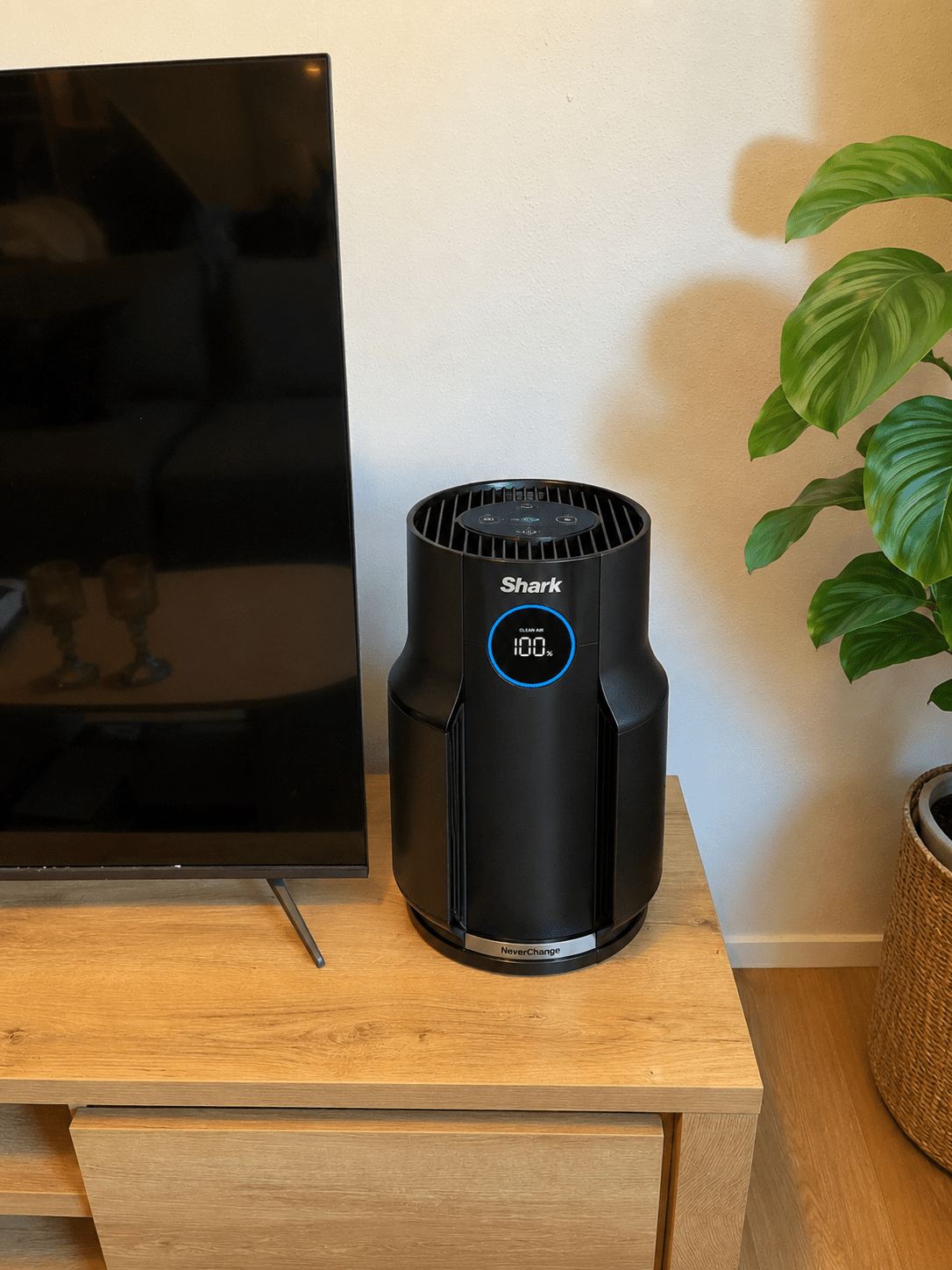
What Does an Air Purifier Do?
How does an air purifier works is hopefully clearer now. But what is the exact functionality of an air purifier? An air purifier improves indoor air quality by drawing polluted air into the device, capturing contaminants in the filters, and then distributing clean, fresh air back into the room.
What it Removes
- Allergens: Traps pollen, dust mites, and pet dander to help relieve allergy and hay fever symptoms.
- Fine Particles: Captures fine dust, smoke, and soot.
- Microbes & Mold: Filters out airborne mold spores, bacteria, and some viruses.
- Odors & Gases: Uses activated carbon to absorb cooking smells, volatile organic compounds (VOCs), and chemical fumes.
Air Purifiers for Specific Desires
Whether you’re looking for an air purifier for your allergies or specifically if you’re allergic to cats, I’m here to guide you in the right direction. I researched air purifiers for allergies in general and cat allergies:
- The 4 Best Air Purifiers for Allergies
- The 3 Best Air Purifiers for Cat Allergies
- Air Purifier for Pollen
- Best Air Purifier for Pets
- Best Air Purifier for Mold
- Best Air Purifier for Smoke
- Best Air Purifier for Dust
Discover More About Air Purifiers
Read my informational articles about how to use your air purifier the best way:
- Best Place to Put Air Purifier
- How to Use Air Purifier
- What does a HEPA Filter Do?
- Does an Air Purifier Help with Dust
Performance Features to Look for
When choosing an air purifier, the most important features to prioritize are True HEPA Filtration, an Activated Carbon later, and an appropriate CADR (Clean Air Delivery Rate) rating for your room size. A high-quality model should effectively remove fine particles, eliminate gases or odors, and cycle the room’s air multiple times per hour.
What does an air purifier do is important to understand, because you then know how it works and how it might have a positive effect on your daily life. However, when considering an air purifier, you also need to know what key features you have to look out for. These are the most important key features:
1. Essential Filtration Stages
- True HEPA Filter: Captures 99.97% of airborne particles as small as 0.3 microns. It targets allergens like pollen, mold spores, dust mites, and pet dander. Look for “True HEPA” or “H13 HEPA” rather than vague terms like “HEPA-type”.
- Activated Carbon Filter: Uses porous charcoal to absorb odors, smoke, cooking fumes, and harmful Volatile Organic Compounds (VOCs). Standard HEPA filters cannot trap these gaseous pollutants.
- Pre-Filter: Traps large particles like hair, fur, and large dust clumps. A washable or vacuum-friendly pre-filter extends the lifespan of the more expensive HEPA filter.
2. Performance Metrics
- CADR (Clean Air Delivery Rate): Measures how quickly the unit filters smoke, dust, and pollen. Use the “2/3 rule”: choose a unit with a smoke CADR rating that is at least two-thirds of your room’s total square footage.
- ACH (Air Changes per Hour): Indicates how many times the machine can clean all the air in a room in 60 minutes. For allergy or asthma sufferers, aim for a minimum rating of 4 ACH to 5 ACH.
3. Smart & Automation Features
- Air Quality Sensors: Built-in particle counters monitor pollution levels in real-time.
- Auto Mode: Automatically adjusts the fan speed based on real-time sensor readings to save energy.
- PM2.5 Digital Display: Gives a clear visual reading or color-coded light indicating current indoor air quality.
- Wi-Fi & App Connectivity: Allows you to set operation schedules, view historical air data, and track filter health from your phone.
4. Usability & Maintenance
- Filter Indicator Light: Alerts you exactly when a filter is clogged and needs replacing.
- Noise Level & Sleep Mode: Essential for bedrooms. Look for models that run under 30 decibels (dB) on low or feature a dimmable “Sleep Mode.”
- Ozone-Free Certification: Ensure the unit is CARB-certified or UL 2998-certified. Avoid purifiers that intentionally generate ozone, which can irritate your lungs.